Barbell Chest Exercises
The barbell is where chest strength is measured. One bar driven by both arms lets you load more weight than any other chest tool and add to it in small increments, which is why the bench press is the benchmark lift of the upper body. Flat, incline, and decline angles move the emphasis between the sternal, clavicular, and lower fibres of the pec, and the close-grip variation hands most of the work to the triceps while still allowing near-bench loads.
Why train chest with barbell
- The heaviest absolute loading available for the chest
- Flat, incline, and decline angles bias different regions of the pec
- Small plate jumps make month-over-month progress measurable
- Builds the pressing strength every other upper-body lift borrows from
All 15 barbell chest exercises
Every guide below includes an animated GIF demonstration, numbered form cues, the muscle it targets, and sets and reps for strength, hypertrophy, and endurance.
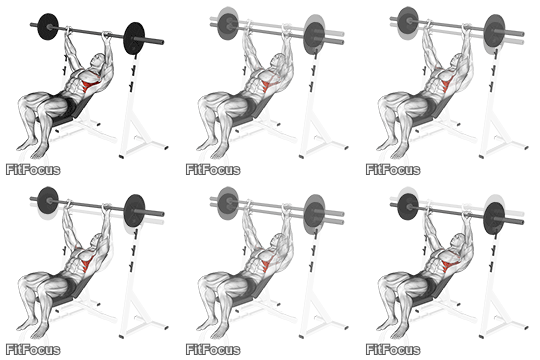 Barbell Incline Shoulder RaiseSerratus Anterior · Barbell · Beginner
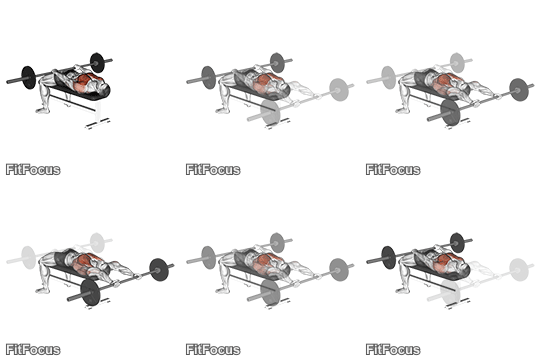 Barbell Front Raise And PulloverPectorals · Barbell · Intermediate
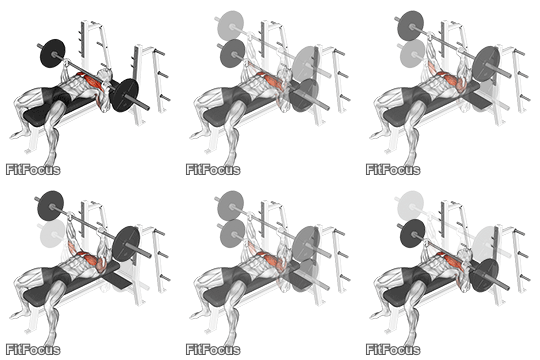 Barbell Bench PressPectorals · Barbell · Intermediate
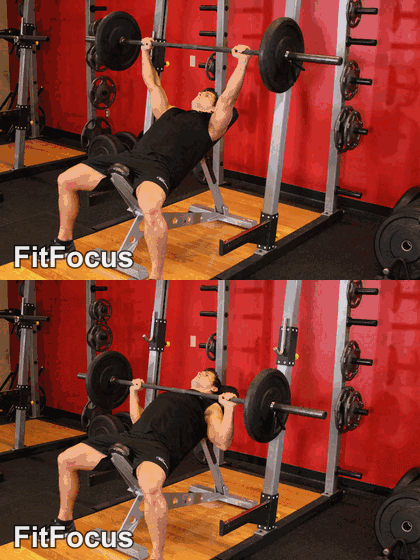 Incline Barbell Bench PressPectorals · Barbell · Intermediate
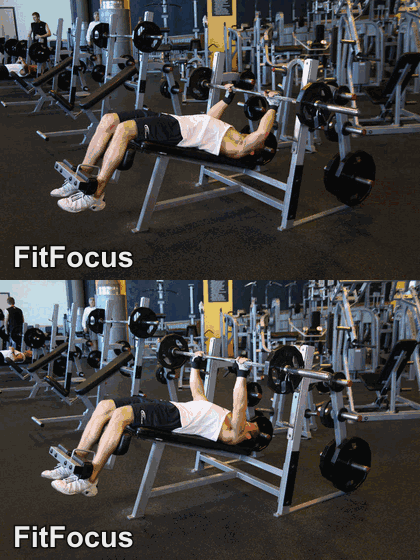 Decline Barbell Bench PressPectorals · Barbell · Intermediate
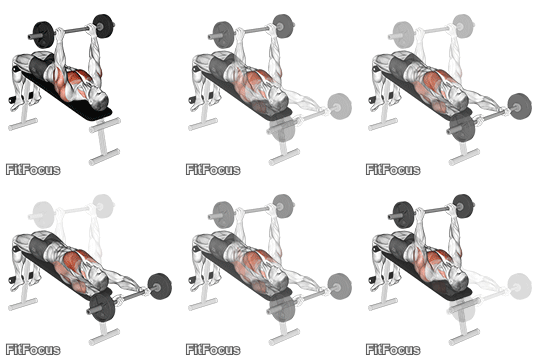 Barbell Decline PulloverPectorals · Barbell · Intermediate
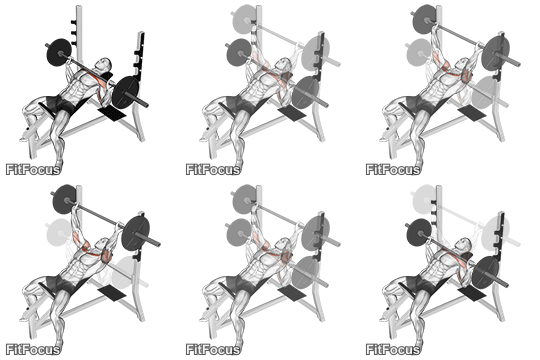 Barbell Incline Bench PressPectorals · Barbell · Intermediate
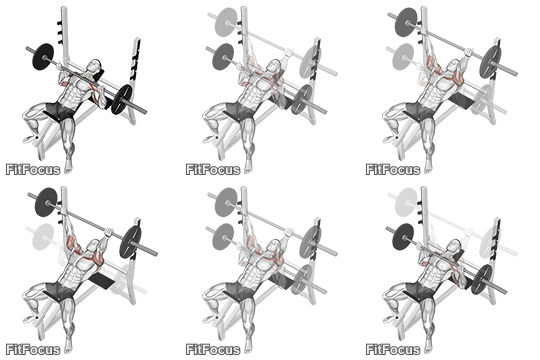 Barbell Reverse Grip Incline Bench PressPectorals · Barbell · Advanced
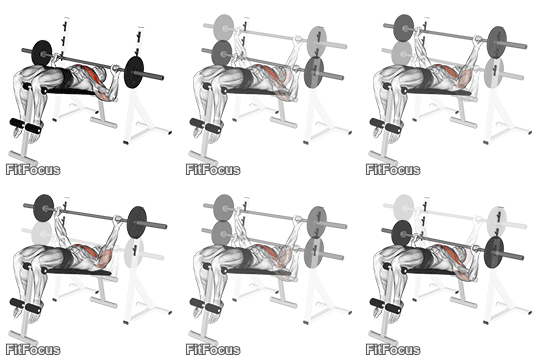 Barbell Decline Wide-grip PressPectorals · Barbell · Intermediate
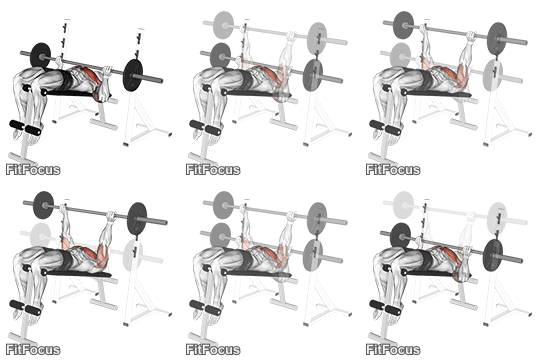 Barbell Reverse Grip Decline Bench PressPectorals · Barbell · Intermediate
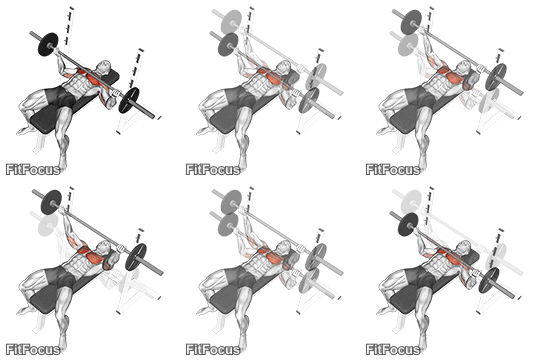 Barbell Wide Reverse Grip Bench PressPectorals · Barbell · Intermediate
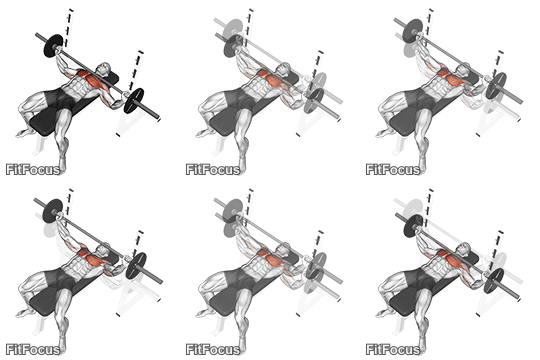 Barbell Wide Bench PressPectorals · Barbell · Intermediate
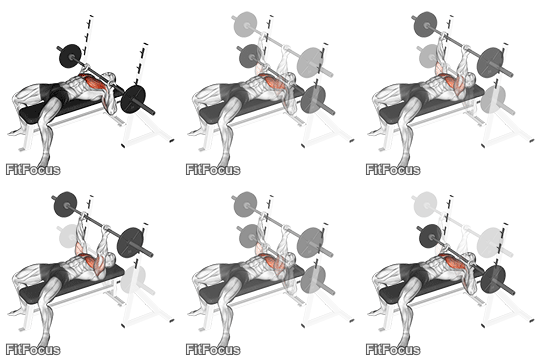 Barbell Guillotine Bench PressPectorals · Barbell · Intermediate
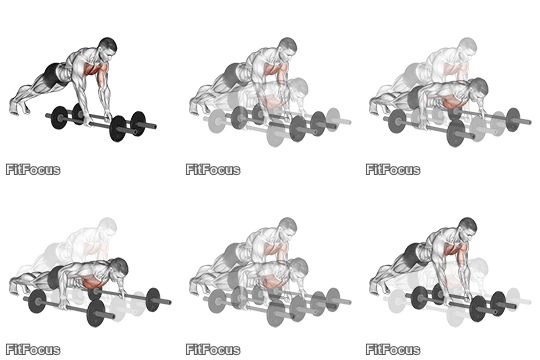 Floor Fly (with Barbell)Pectorals · Barbell · Intermediate
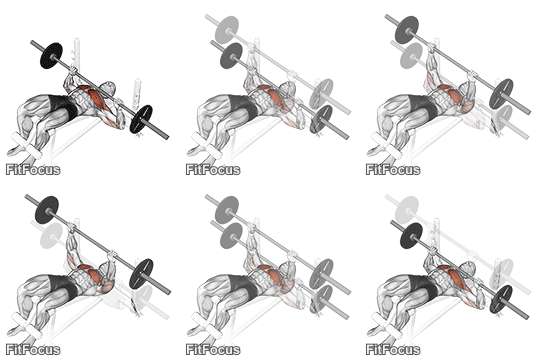 Barbell Decline Bench PressPectorals · Barbell · Intermediate
Barbell Chest Training FAQ
How often should I bench press?
Two sessions a week suits most lifters. Pressing twice gives you more practice on a technique-heavy lift and spreads the weekly volume so each session can be hard without wrecking the shoulders. Run one heavier day in the four-to-six rep range and one lighter day in the eight-to-twelve range rather than two maximal sessions.
Should the bar touch my chest on every rep?
Yes, if your shoulders allow it. Touching the chest gives the full range and the stretched position where most of the growth stimulus lives. Cut the range short only if you feel pinching at the front of the shoulder, and in that case fix it by tucking the elbows to around 45 degrees and retracting the shoulder blades before you shorten the rep.
Incline or flat bench for chest growth?
Both. Flat pressing loads the largest portion of the pec and lets you move the most weight; incline pressing is the only reliable way to load the clavicular head near the collarbone, which is the region most lifters are visibly missing. A week that contains one of each covers the muscle better than doubling up on either.