Barbell Bench Press
Everything about the bench press is decided before the bar moves: where the shoulder blades sit, where the feet are, and whether the bar path travels back toward the shoulders on the way up.
How to do Barbell Bench Press
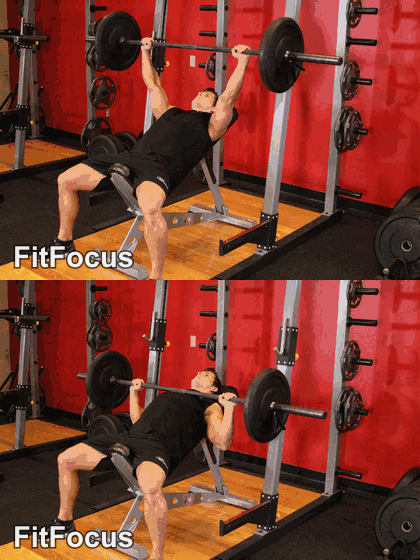
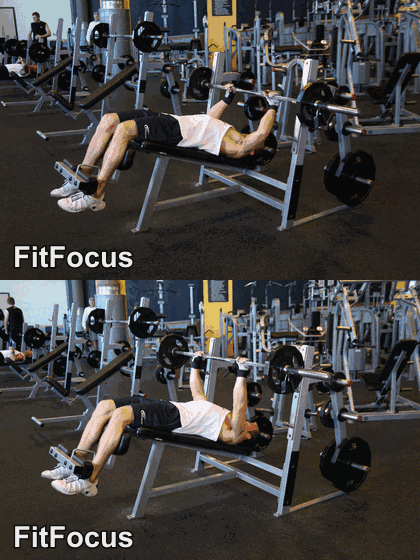
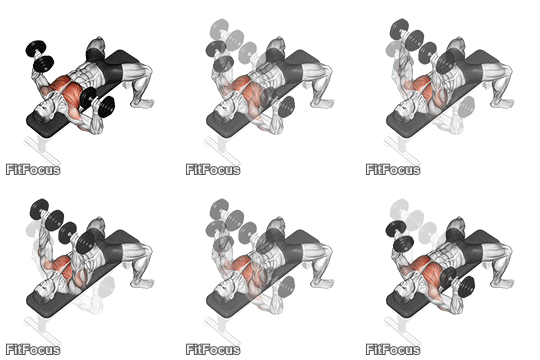
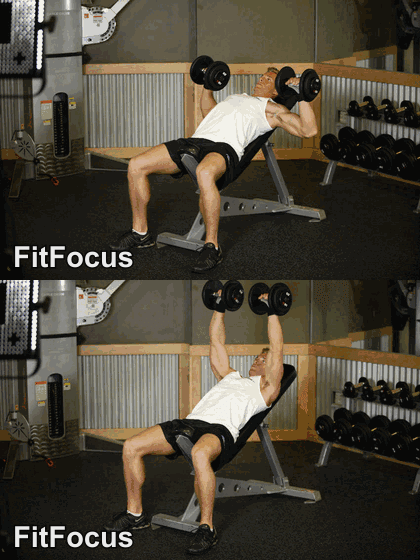
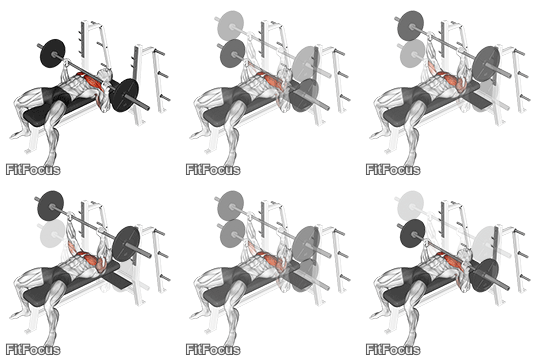
- Lie back on a flat bench. Using a medium width grip (a grip that creates a 90-degree angle in the middle of the movement between the forearms and the upper arms), lift the bar from the rack and hold it straight over you with your arms locked. This will be your starting position.
- From the starting position, breathe in and begin coming down slowly until the bar touches your middle chest.
- After a brief pause, push the bar back to the starting position as you breathe out. Focus on pushing the bar using your chest muscles. Lock your arms and squeeze your chest in the contracted position at the top of the motion, hold for a second and then start coming down slowly again. Tip: Ideally, lowering the weight should take about twice as long as raising it.
- Repeat the movement for the prescribed amount of repetitions.
- When you are done, place the bar back in the rack.
Barbell Bench Press Sets and Reps by Goal
Strength
4-5 sets of 3-5 reps at 80-88% of your one-rep max, 3-5 minutes rest. Reset the shoulder blades and the brace before every single rep.
Hypertrophy
3-4 sets of 8-12 reps with a 2-3 second descent and a touch at the chest, 90-120 seconds rest, stopping 1-2 reps short of failure on all but the last set.
Endurance
3 sets of 15-20 reps at roughly 50% of your max with 60 seconds rest, keeping the bar moving continuously rather than resting at lockout.
The other half of the week
First plan free
Training is half the prescription
A session tells your pectorals to adapt. The week you eat decides whether they can. FitFocus writes that week against your own calorie and macro numbers, in about a minute, for free.
- Included: Seven days solved against your calorie and macro targets
- Included: Diet type and allergies applied before the plan is written
- Included: Built from the same profile as your workout plan, on one account
- Days
- 7
- Meals / day
- 3-6
- Diet types
- 5
- Exclusions
- 6
No card. Premium is $9.99 / month.
Common Barbell Bench Press Mistakes
Letting the shoulder blades slide flat against the bench, which pushes the shoulders forward and puts the joint capsule in the worst position under load.
Before unracking, pull the shoulder blades down and together and hold them there for the whole set. The bar should feel like it is being lowered toward a fixed chest, not onto loose shoulders.
Flaring the elbows to 90 degrees from the torso, which is the classic setup for anterior shoulder pain.
Keep the upper arms nearer 45-60 degrees from the ribcage. The forearms should stay vertical when viewed from the side at the bottom of the rep.
Bouncing the bar off the ribcage to get out of the bottom, which removes the hardest part of the lift and risks a sternum injury.
Touch the chest with control, pause for a beat, then drive. If you cannot pause, the weight is too heavy for the reps you are attempting.
Pressing the bar straight up over the face, so the shoulders take the load the chest should be carrying.
Lower to the lower chest and press back on a slight diagonal so the bar finishes over the shoulder joint, not over the throat.
Easier and Harder Than Barbell Bench Press
Swap Barbell Bench Press For
Barbell Bench Press — Frequently Asked Questions
How do you do the Barbell Bench Press?
Lie back on a flat bench. Using a medium width grip (a grip that creates a 90-degree angle in the middle of the movement between the forearms and the upper arms), lift the bar from the rack and hold it straight over you with your arms locked. This will be your starting position. From the starting position, breathe in and begin coming down slowly until the bar touches your middle chest. After a brief pause, push the bar back to the starting position as you breathe out. Focus on pushing the bar using your chest muscles. Lock your arms and squeeze your chest in the contracted position at the top of the motion, hold for a second and then start coming down slowly again. Tip: Ideally, lowering the weight should take about twice as long as raising it. Use a barbell and keep the movement controlled through the full range. The animated GIF above shows the complete rep at normal speed.
What muscles does the Barbell Bench Press work?
The Barbell Bench Press primarily targets the pectorals. It is classified as a chest exercise and is performed with a barbell.
How many sets and reps of the Barbell Bench Press should I do?
For muscle growth: 3-4 sets of 8-12 reps with a 2-3 second descent and a touch at the chest, 90-120 seconds rest, stopping 1-2 reps short of failure on all but the last set. Adjust the load rather than the rep target if form breaks down before the final rep.
Is the Barbell Bench Press good for beginners?
It is an intermediate movement. You will get more out of it once you can already perform the basic chest patterns with controlled form. Beginners can still use it with light load and close attention to technique.
What can I do instead of the Barbell Bench Press?
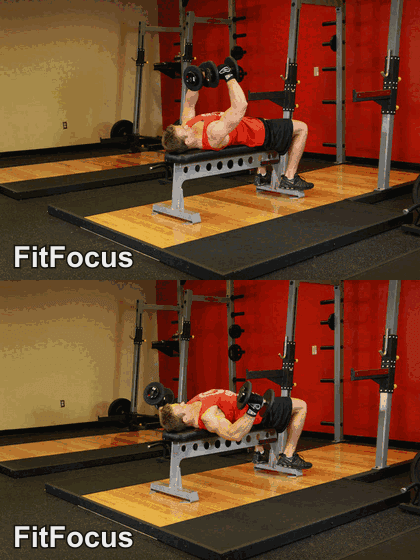
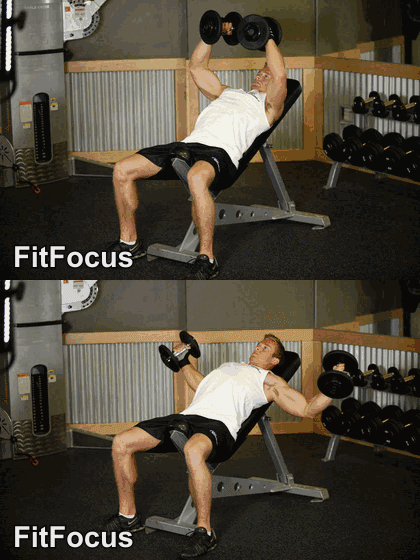
Try the Dumbbell Bench Press, Pec Deck Fly or the Chest Dip. Each trains the pectorals with a similar movement pattern, so you can swap based on the equipment you have available.
Routines that program Barbell Bench Press
Push Pull Legs (PPL)
The highest-frequency split that still gives each muscle group two sessions a week. Push days train chest, shoulders and triceps. Pull days train back and biceps. Leg days train everything below the waist.
6 days / week
Upper Lower Split
Four sessions a week, each muscle group trained twice. It is the split most intermediate lifters should run: enough frequency to grow, enough rest days to recover, and it survives a missed session better than a six-day plan.
4 days / week
Full Body Workout Plan
Three sessions a week, every major muscle group trained in each one. It is the most efficient structure in existence for the first year of training, and the best option for anyone who cannot guarantee more than three gym days.
3 days / week
Weight Loss Workout Plan
Losing weight is decided by your diet. What training decides is whether the weight you lose is fat or muscle. This plan keeps heavy compound lifting at the centre and adds conditioning around it, which is the arrangement that protects muscle in a calorie deficit.
4 days / week