Push Pull Legs (PPL)
The highest-frequency split that still gives each muscle group two sessions a week. Push days train chest, shoulders and triceps. Pull days train back and biceps. Leg days train everything below the waist.
- Level
- Intermediate
- Goal
- Build muscle
- Days / week
- 6
- Session
- 70m
- Exercises
- 18
Is this the right plan for you?
Run this if
- Included: Lifters with at least six months of consistent training
- Included: Anyone who can reliably get to a gym six days a week
- Included: People whose main goal is muscle size rather than a single strength number
Pick something else if
- Not included: Complete beginners, who progress faster on full body three days a week
- Not included: Anyone who cannot commit to six sessions, since the split loses its logic at four
- Not included: Lifters returning from a long layoff or injury
Weekly schedule
Push, Pull, Legs, Push, Pull, Legs, rest
Equipment needed: Full gym: barbell, dumbbells, cable stack, machines
The sessions
Session 01
Push
Chest, shoulders, triceps
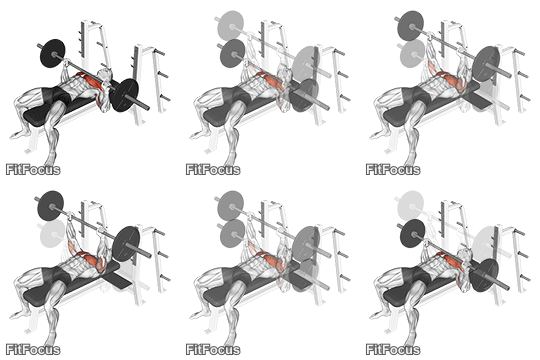
Barbell Bench Press
Your first movement of the week while you are freshest. Leave one rep in reserve on every set.
- Sets
- 4
- Reps
- 6-8
- Rest
- 180s
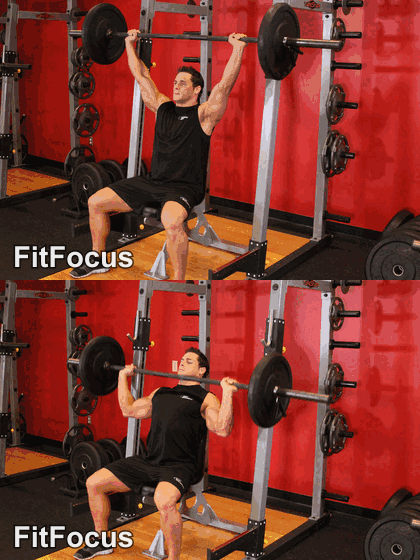
Barbell Overhead Press
Squeeze the glutes to stop the lower back arching as the bar passes your face.
- Sets
- 3
- Reps
- 6-10
- Rest
- 150s
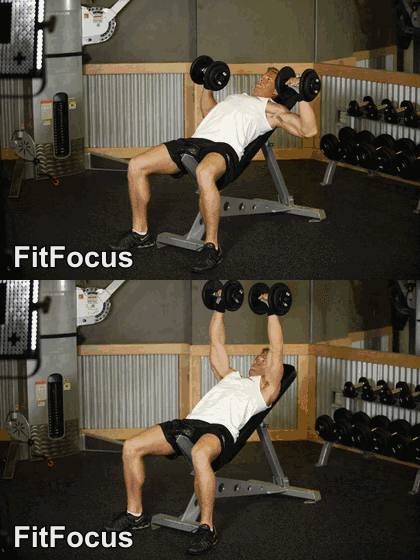
Incline Dumbbell Press
Set the bench near 30 degrees. Steeper turns this into a shoulder press.
- Sets
- 3
- Reps
- 8-12
- Rest
- 120s
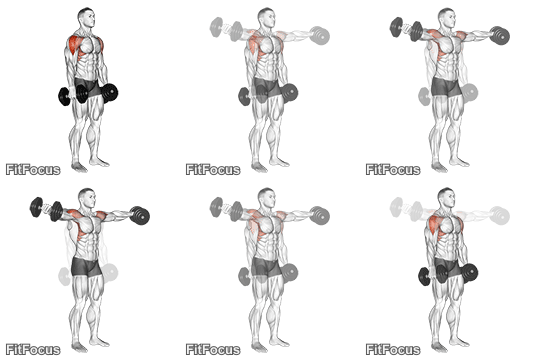
Dumbbell Lateral Raise
Lead with the elbows and stop at shoulder height.
- Sets
- 3
- Reps
- 12-15
- Rest
- 75s
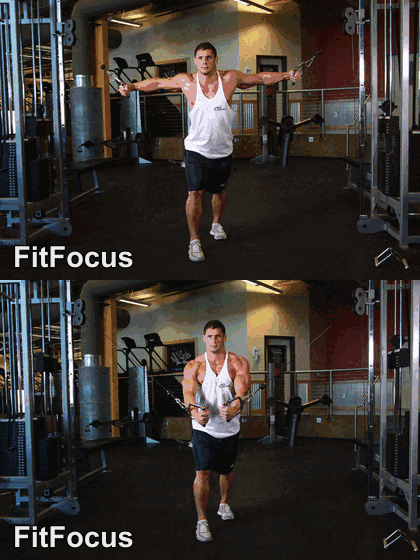
Cable Crossover
Think about bringing the elbows together rather than the hands.
- Sets
- 3
- Reps
- 12-15
- Rest
- 75s
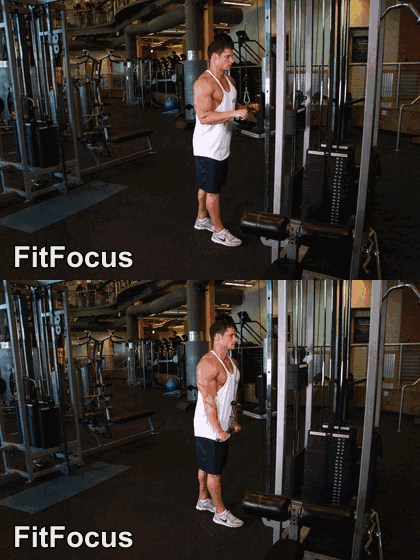
Triceps Pushdown
Keep the upper arms pinned to your sides throughout.
- Sets
- 3
- Reps
- 10-15
- Rest
- 75s
Session 02
Pull
Back, rear delts, biceps
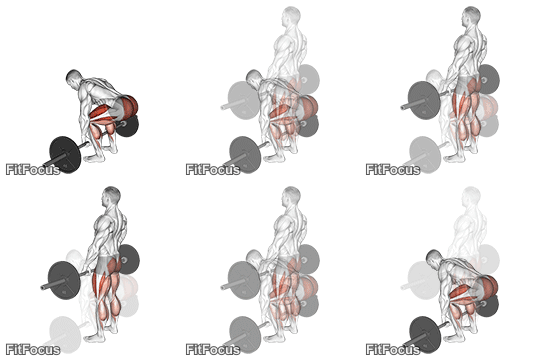
Barbell Deadlift
Only on the first pull day of the week. Stop the set the moment the lower back rounds.
- Sets
- 3
- Reps
- 4-6
- Rest
- 210s
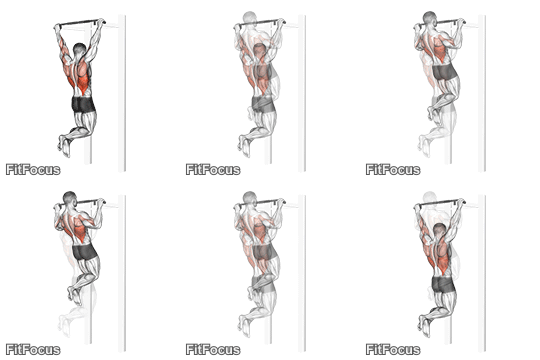
Pull-Up
Add load once you clear ten clean reps. Use the assisted version below that.
- Sets
- 4
- Reps
- 6-10
- Rest
- 150s
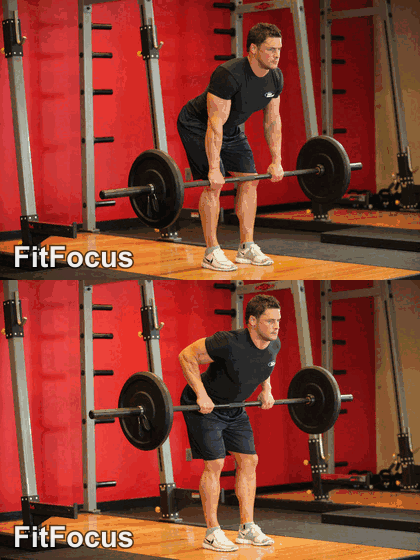
Bent Over Barbell Row
Torso close to parallel. If it rises to catch the rep, the weight is too heavy.
- Sets
- 3
- Reps
- 8-10
- Rest
- 150s
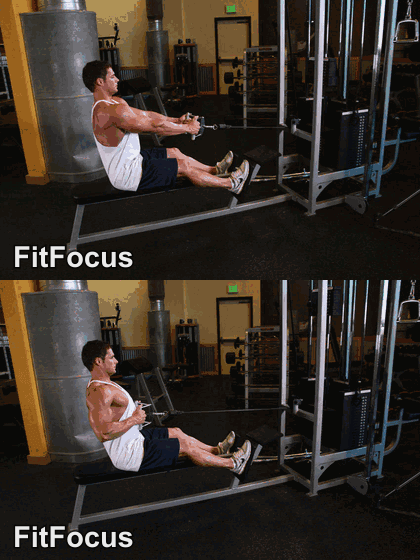
Seated Cable Row
Pull to the navel, not the chest, and hold the squeeze for a beat.
- Sets
- 3
- Reps
- 10-12
- Rest
- 105s
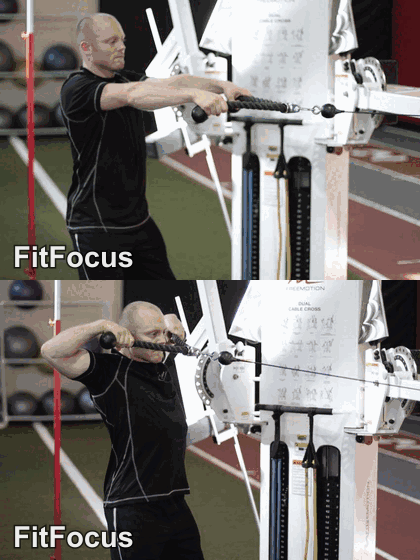
Face Pull
The single best insurance policy against the shoulder problems push days create.
- Sets
- 3
- Reps
- 15-20
- Rest
- 75s
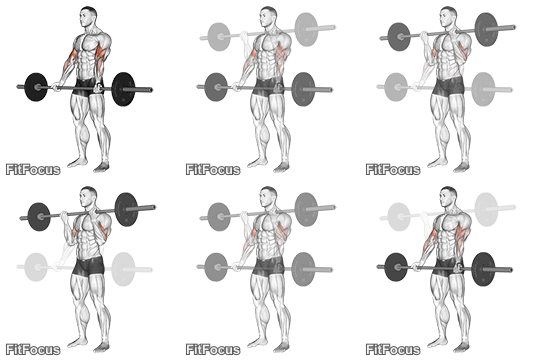
Barbell Curl
No swinging. If the hips move, drop the bar weight.
- Sets
- 3
- Reps
- 8-12
- Rest
- 75s
Session 03
Legs
Quads, hamstrings, glutes, calves, core
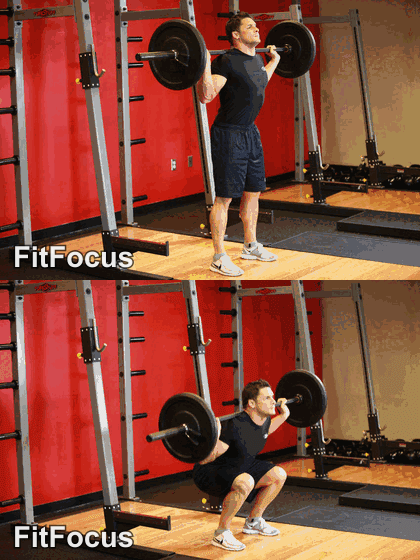
Barbell Squat
Depth before load. Hit at least parallel every rep or reduce the weight.
- Sets
- 4
- Reps
- 5-8
- Rest
- 210s
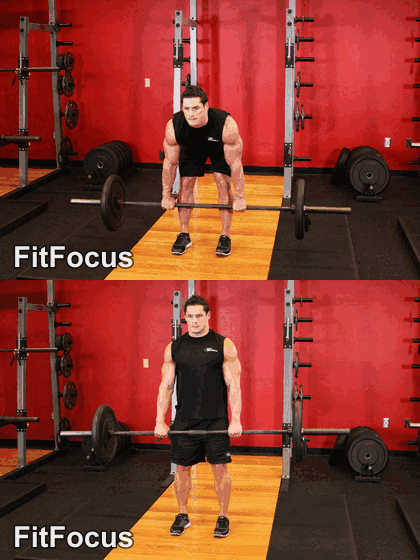
Romanian Deadlift
Push the hips back, keep the bar dragging your legs, stop when the hamstrings run out.
- Sets
- 3
- Reps
- 8-10
- Rest
- 150s
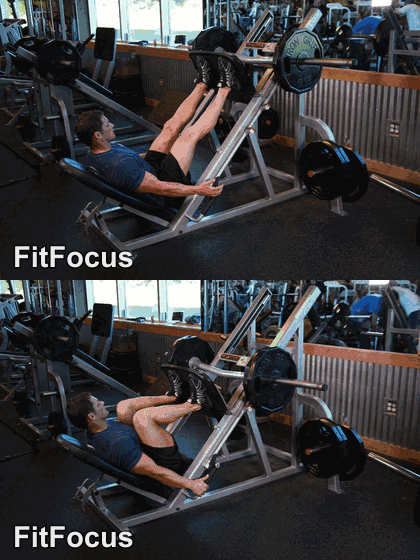
Leg Press
Do not let the lower back lift off the pad at the bottom.
- Sets
- 3
- Reps
- 10-15
- Rest
- 120s
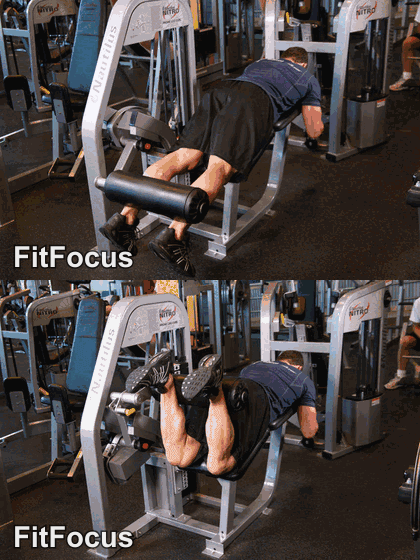
Lying Leg Curl
Slow on the way down. The lowering half is where hamstrings grow.
- Sets
- 3
- Reps
- 10-15
- Rest
- 90s
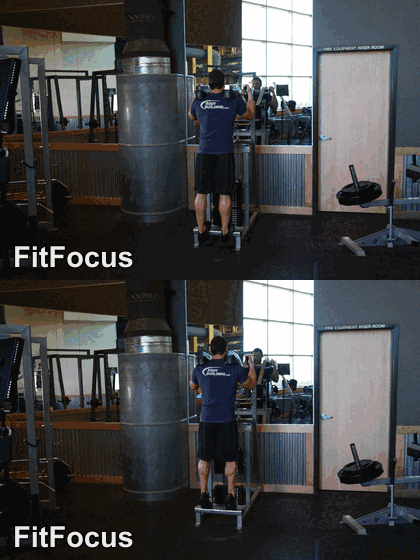
Standing Calf Raise
Full stretch at the bottom, hard pause at the top.
- Sets
- 4
- Reps
- 12-20
- Rest
- 60s
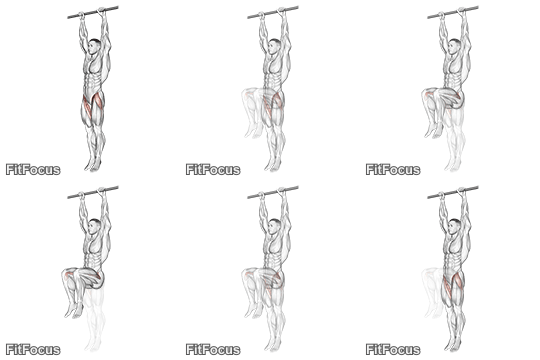
Hanging Leg Raise
Curl the pelvis up rather than just swinging the legs.
- Sets
- 3
- Reps
- 10-15
- Rest
- 60s
How to progress
- 01Add one rep to each set until you reach the top of the rep range on every set.
- 02When every set hits the top of the range, add the smallest available load and drop back to the bottom of the range.
- 03Deload every sixth week by cutting the sets in half and keeping the same loads.
Questions about this plan
- Can I run push pull legs three days a week?
- Yes, and it becomes a perfectly good split, but each muscle group is then hit once a week rather than twice. At three days a week a full body routine usually produces more growth for the same time in the gym.
- Should deadlifts go on pull day or leg day?
- Either works. On pull day they train the back with the legs fresh. On leg day they compete with squats for the same recovery. This version puts them on the first pull day only, which keeps both days manageable.
- How long should a PPL session take?
- About 70 minutes with the rest periods listed. If you are going much past 90 minutes, cut an isolation exercise rather than shortening rest on the heavy compounds.
- Is PPL good for beginners?
- Not usually. Beginners recover fast enough to train each muscle three times a week, so a full body routine three days a week progresses faster and takes half the weekly commitment.
Want this adjusted to you?
This is a fixed template. The generator writes the same structure around your level, goal, available days and equipment, and it is free for the first plan.
Other routines
Upper Lower Split
Four sessions a week, each muscle group trained twice. It is the split most intermediate lifters should run: enough frequency to grow, enough rest days to recover, and it survives a missed session better than a six-day plan.
4 days
Full Body Workout Plan
Three sessions a week, every major muscle group trained in each one. It is the most efficient structure in existence for the first year of training, and the best option for anyone who cannot guarantee more than three gym days.
3 days
Dumbbell Only Workout Plan
A full training week built entirely from dumbbell and bodyweight movements. Everything here works in a spare room with one adjustable pair, and it covers every major muscle group without a barbell, rack or cable stack.
3 days
Bodyweight Workout Plan
A complete training week that needs no equipment at all. Progress comes from harder variations and higher reps rather than heavier loads, so it keeps working long past the first month.
3 days
Weight Loss Workout Plan
Losing weight is decided by your diet. What training decides is whether the weight you lose is fat or muscle. This plan keeps heavy compound lifting at the centre and adds conditioning around it, which is the arrangement that protects muscle in a calorie deficit.
4 days