Incline Dumbbell Press
Incline Dumbbell Press fits in after your main press, and independent dumbbell loading keeps the focus on pressing power across the chest.
How to do Incline Dumbbell Press
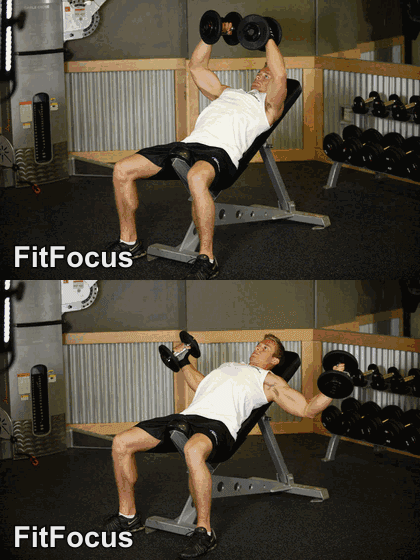
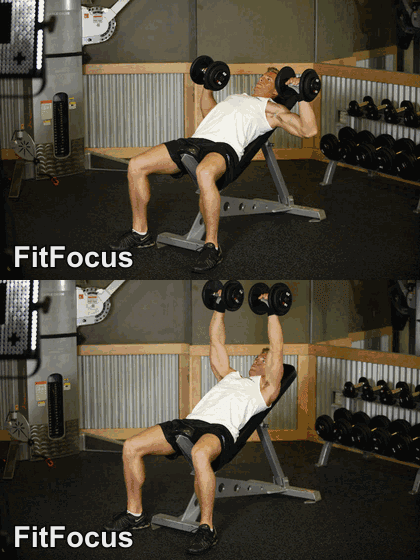
- Lie back on an incline bench with a dumbbell in each hand atop your thighs. The palms of your hands will be facing each other.
- Then, using your thighs to help push the dumbbells up, lift the dumbbells one at a time so that you can hold them at shoulder width.
- Once you have the dumbbells raised to shoulder width, rotate your wrists forward so that the palms of your hands are facing away from you. This will be your starting position.
- Be sure to keep full control of the dumbbells at all times. Then breathe out and push the dumbbells up with your chest.
- Lock your arms at the top, hold for a second, and then start slowly lowering the weight. Tip Ideally, lowering the weights should take about twice as long as raising them.
- Repeat the movement for the prescribed amount of repetitions.
- When you are done, place the dumbbells back on your thighs and then on the floor. This is the safest manner to release the dumbbells.
Incline Dumbbell Press Sets and Reps by Goal
Strength
3 sets of 5-6 reps with 2-3 minutes of rest. Size up only when both sides finish equally strong.
Hypertrophy
3 sets of 10-12 reps with 90 seconds of rest. Start each set with the weaker arm and match it.
Endurance
2-3 sets of 15-18 reps with 45-60 seconds of rest. Add reps on the smaller bell before you size up.
The other half of the week
First plan free
Training is half the prescription
A session tells your pectorals to adapt. The week you eat decides whether they can. FitFocus writes that week against your own calorie and macro numbers, in about a minute, for free.
- Included: Seven days solved against your calorie and macro targets
- Included: Diet type and allergies applied before the plan is written
- Included: Built from the same profile as your workout plan, on one account
- Days
- 7
- Meals / day
- 3-6
- Diet types
- 5
- Exclusions
- 6
No card. Premium is $9.99 / month.
Common Incline Dumbbell Press Mistakes
Letting the stronger arm set the pace for both sides
Match the weaker side rep for rep and stop when it stops.
Letting the shoulders roll forward at the bottom
Set the shoulder blades back and down before rep one and hold it there.
Easier and Harder Than Incline Dumbbell Press
Swap Incline Dumbbell Press For
Incline Dumbbell Press — Frequently Asked Questions
How do you do the Incline Dumbbell Press?
Lie back on an incline bench with a dumbbell in each hand atop your thighs. The palms of your hands will be facing each other. Then, using your thighs to help push the dumbbells up, lift the dumbbells one at a time so that you can hold them at shoulder width. Once you have the dumbbells raised to shoulder width, rotate your wrists forward so that the palms of your hands are facing away from you. This will be your starting position. Use dumbbells and keep the movement controlled through the full range. The animated GIF above shows the complete rep at normal speed.
What muscles does the Incline Dumbbell Press work?
The Incline Dumbbell Press primarily targets the pectorals. It is classified as a chest exercise and is performed with dumbbells.
How many sets and reps of the Incline Dumbbell Press should I do?
For muscle growth: 3 sets of 10-12 reps with 90 seconds of rest. Start each set with the weaker arm and match it. Adjust the load rather than the rep target if form breaks down before the final rep.
Is the Incline Dumbbell Press good for beginners?
Yes. The Incline Dumbbell Press is a beginner-level movement, so it is a reasonable place to start. Keep the load light enough that you can control every rep and stop 2-3 reps short of failure while you learn the pattern.
What can I do instead of the Incline Dumbbell Press?
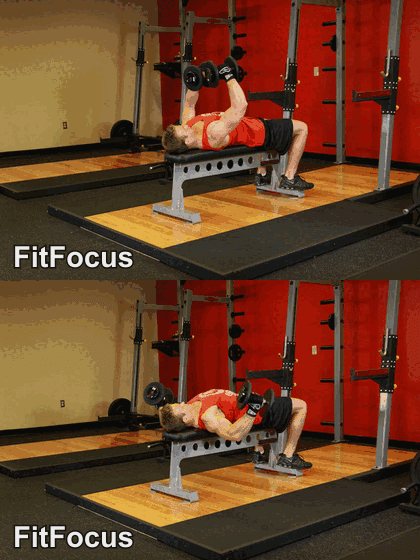
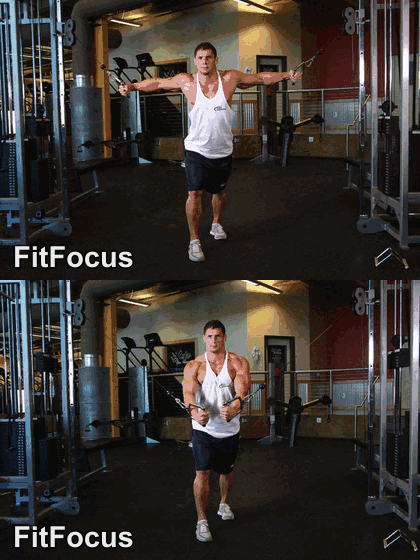
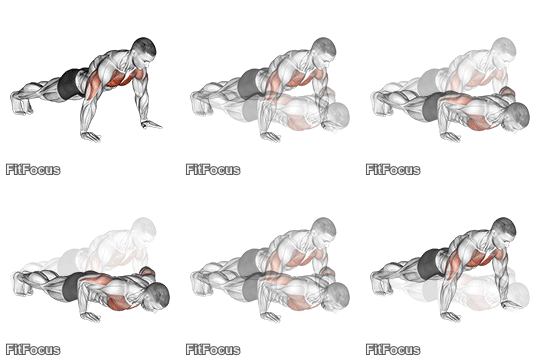
Try the Wide Hand Push Up, Cable Lying Fly or the Lever Chest Press. Each trains the pectorals with a similar movement pattern, so you can swap based on the equipment you have available.
Routines that program Incline Dumbbell Press
Push Pull Legs (PPL)
The highest-frequency split that still gives each muscle group two sessions a week. Push days train chest, shoulders and triceps. Pull days train back and biceps. Leg days train everything below the waist.
6 days / week
Upper Lower Split
Four sessions a week, each muscle group trained twice. It is the split most intermediate lifters should run: enough frequency to grow, enough rest days to recover, and it survives a missed session better than a six-day plan.
4 days / week
Full Body Workout Plan
Three sessions a week, every major muscle group trained in each one. It is the most efficient structure in existence for the first year of training, and the best option for anyone who cannot guarantee more than three gym days.
3 days / week
Dumbbell Only Workout Plan
A full training week built entirely from dumbbell and bodyweight movements. Everything here works in a spare room with one adjustable pair, and it covers every major muscle group without a barbell, rack or cable stack.
3 days / week