Dumbbell Flyes
Use independent dumbbell loading to build a chest that grows from tension: Dumbbell Flyes slots into any chest session.
How to do Dumbbell Flyes
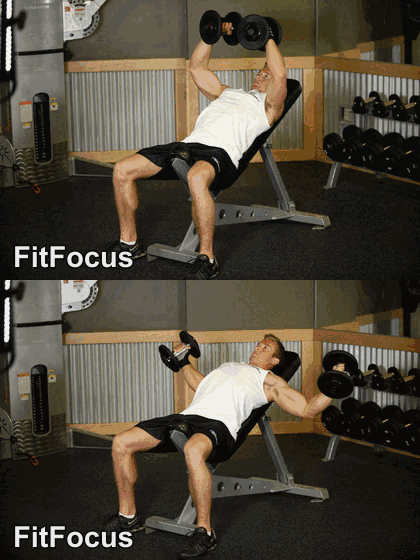
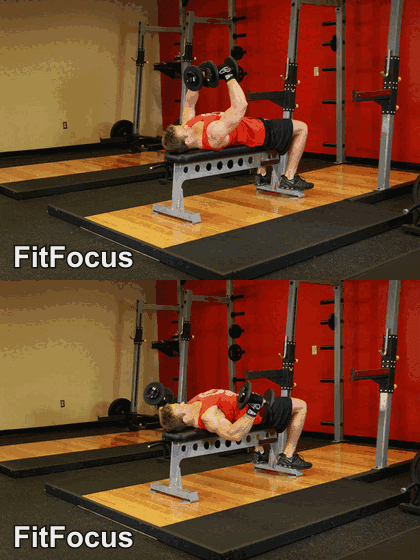
- Lie down on a flat bench with a dumbbell on each hand resting on top of your thighs. The palms of your hand will be facing each other.
- Then using your thighs to help raise the dumbbells, lift the dumbbells one at a time so you can hold them in front of you at shoulder width with the palms of your hands facing each other. Raise the dumbbells up like you're pressing them, but stop and hold just before you lock out. This will be your starting position.
- With a slight bend on your elbows in order to prevent stress at the biceps tendon, lower your arms out at both sides in a wide arc until you feel a stretch on your chest. Breathe in as you perform this portion of the movement. Tip: Keep in mind that throughout the movement, the arms should remain stationary; the movement should only occur at the shoulder joint.
- Return your arms back to the starting position as you squeeze your chest muscles and breathe out. Tip: Make sure to use the same arc of motion used to lower the weights.
- Hold for a second at the contracted position and repeat the movement for the prescribed amount of repetitions.
Dumbbell Flyes Sets and Reps by Goal
Strength
3 sets of 5-6 reps with 2-3 minutes of rest. Start each set with the weaker arm and match it.
Hypertrophy
3 sets of 10-12 reps with 90 seconds of rest. Add reps on the smaller bell before you size up.
Endurance
2-3 sets of 15-18 reps with 45-60 seconds of rest. Size up only when both sides finish equally strong.
The other half of the week
First plan free
Training is half the prescription
A session tells your pectorals to adapt. The week you eat decides whether they can. FitFocus writes that week against your own calorie and macro numbers, in about a minute, for free.
- Included: Seven days solved against your calorie and macro targets
- Included: Diet type and allergies applied before the plan is written
- Included: Built from the same profile as your workout plan, on one account
- Days
- 7
- Meals / day
- 3-6
- Diet types
- 5
- Exclusions
- 6
No card. Premium is $9.99 / month.
Common Dumbbell Flyes Mistakes
Dropping the bells hard at the end of a set
Lower them under control so the last rep still counts as training.
Cutting the range short so the chest never lengthens
Lower under control to a real stretch before pressing back.
Easier and Harder Than Dumbbell Flyes
Swap Dumbbell Flyes For
Dumbbell Flyes — Frequently Asked Questions
How do you do the Dumbbell Flyes?
Lie down on a flat bench with a dumbbell on each hand resting on top of your thighs. The palms of your hand will be facing each other. Then using your thighs to help raise the dumbbells, lift the dumbbells one at a time so you can hold them in front of you at shoulder width with the palms of your hands facing each other. Raise the dumbbells up like you're pressing them, but stop and hold just before you lock out. This will be your starting position. With a slight bend on your elbows in order to prevent stress at the biceps tendon, lower your arms out at both sides in a wide arc until you feel a stretch on your chest. Breathe in as you perform this portion of the movement. Tip: Keep in mind that throughout the movement, the arms should remain stationary; the movement should only occur at the shoulder joint. Use dumbbells and keep the movement controlled through the full range. The animated GIF above shows the complete rep at normal speed.
What muscles does the Dumbbell Flyes work?
The Dumbbell Flyes primarily targets the pectorals. It is classified as a chest exercise and is performed with dumbbells.
How many sets and reps of the Dumbbell Flyes should I do?
For muscle growth: 3 sets of 10-12 reps with 90 seconds of rest. Add reps on the smaller bell before you size up. Adjust the load rather than the rep target if form breaks down before the final rep.
Is the Dumbbell Flyes good for beginners?
Yes. The Dumbbell Flyes is a beginner-level movement, so it is a reasonable place to start. Keep the load light enough that you can control every rep and stop 2-3 reps short of failure while you learn the pattern.
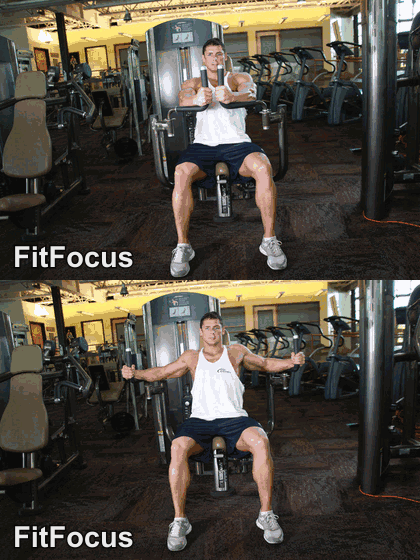
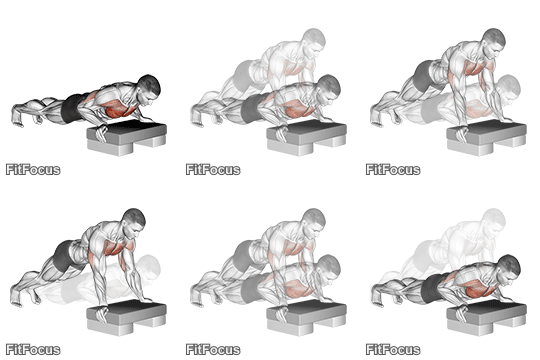
What can I do instead of the Dumbbell Flyes?
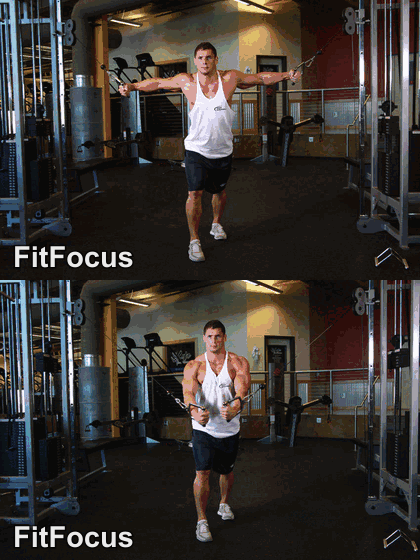
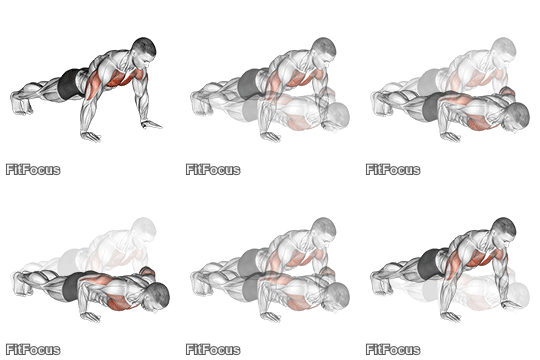
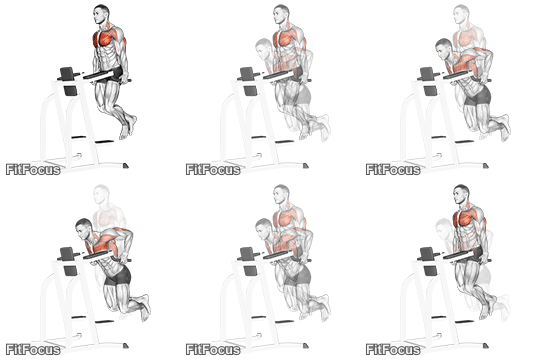
Try the Korean Dips, Cable Press On Exercise Ball or the Resistance Band Seated Chest Press. Each trains the pectorals with a similar movement pattern, so you can swap based on the equipment you have available.