How Much Protein Per Day to Build Muscle (and How to Hit It)
Protein is the one nutrient almost every fitness goal depends on. It builds and repairs muscle after training, it keeps you full on fewer calories, and it protects the muscle you already have when you diet. Yet most people either eat far too little or worry about exact numbers that do not matter.
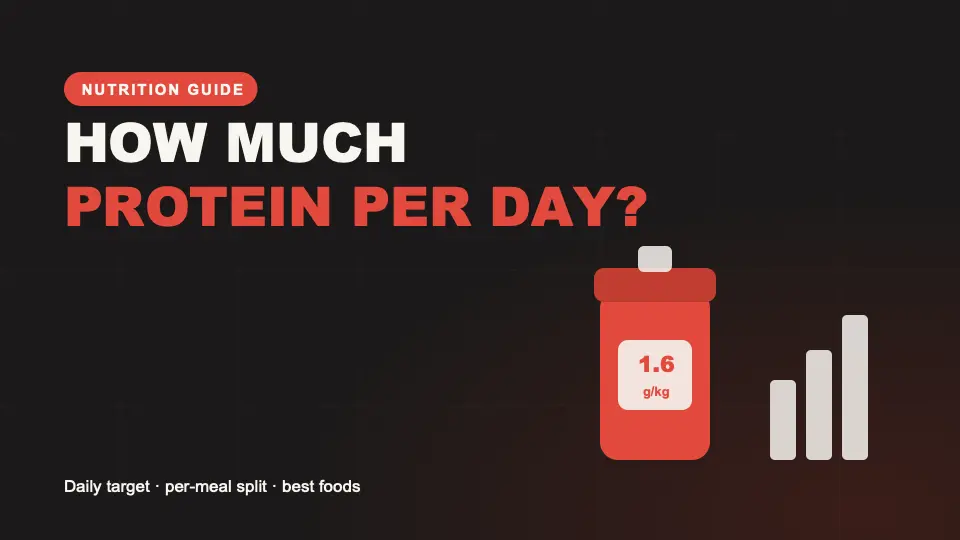
The research is clearer than the internet makes it look. About 1.6 g of protein per kilogram of body weight per day covers almost everyone who lifts, and going up to 2.2 g/kg is a safe ceiling that removes any doubt. This guide shows how to find your number, how to split it across the day, and how to actually hit it with normal food.
How Much Protein Per Day? The Short Answer
| Your situation | Daily protein | Per lb of body weight |
|---|---|---|
| Not training, general health | 0.8 to 1.0 g/kg | 0.36 to 0.45 g/lb |
| Lifting to build muscle | 1.6 to 2.2 g/kg | 0.7 to 1.0 g/lb |
| Losing fat while lifting | 1.8 to 2.4 g/kg | 0.8 to 1.1 g/lb |
| Endurance training | 1.2 to 1.6 g/kg | 0.55 to 0.7 g/lb |
| Adults over 60 | 1.2 to 1.6 g/kg | 0.55 to 0.7 g/lb |
The official 0.8 g/kg guideline is the minimum to avoid deficiency in people who do not exercise. It was never meant as the amount that best supports muscle growth.
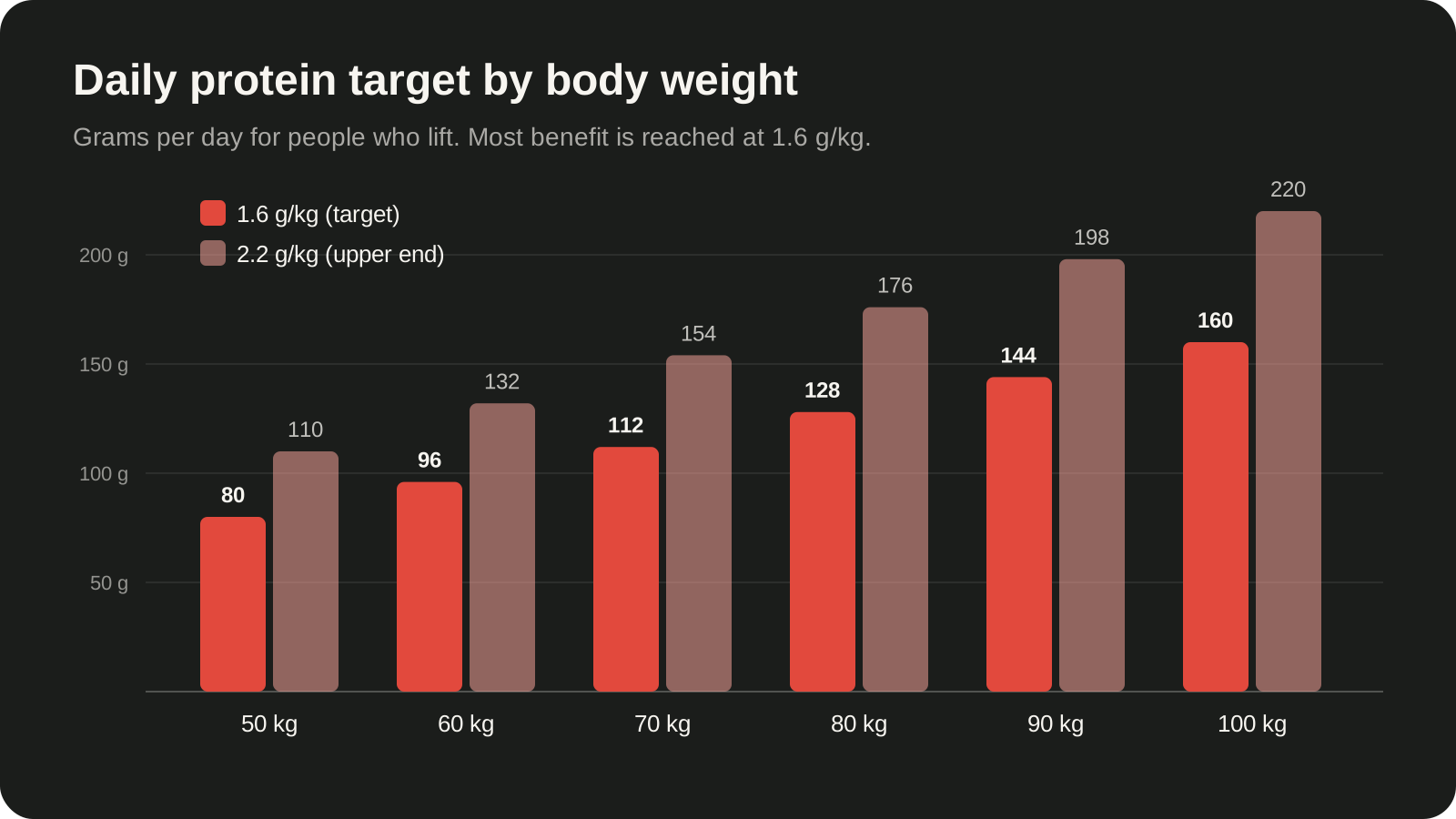
Quick example: an 80 kg person who lifts aims for 80 × 1.6 = 128 g per day. If they want a safety margin, 80 × 2.2 = 176 g is the upper end. Anything in between works.
Why 1.6 g/kg Is the Number to Remember
A large 2018 meta-analysis in the British Journal of Sports Medicine pooled 49 studies on protein and resistance training. Extra protein increased muscle gain, but the benefit levelled off at around 1.6 g/kg per day. The upper confidence limit sat near 2.2 g/kg, which is why that number is the common "just to be sure" target.
In practice:
- Below 1.2 g/kg you leave muscle on the table.
- 1.6 g/kg captures nearly all of the benefit.
- Above 2.2 g/kg adds cost and food volume with no extra muscle.
If you are very overweight, use your goal weight or height in centimetres as your kilogram number. Calculating protein from a high body weight gives a target that is hard to eat and not needed.
Protein When You Are Losing Fat
A calorie deficit makes protein more important, not less. When energy is short, your body is more willing to break down muscle. Higher protein, together with lifting, tells it to keep that muscle and burn fat instead.
- Aim for 1.8 to 2.4 g/kg during a diet. Leaner people and bigger deficits sit at the top of that range.
- Protein is the most filling macronutrient, so a high intake makes the diet easier to stick to.
- It also costs the most energy to digest: roughly 20 to 30% of protein calories are used up in digestion, against 5 to 10% for carbs and 0 to 3% for fat.
If you have not set your calories yet, start with our guide on how to set your macros. Protein comes first, then fat, then carbs fill the rest.
How to Split Protein Across the Day
Total daily protein matters most. Distribution is the next layer, and it is easy to get right.
Muscle building responds best to meals with roughly 0.4 g/kg of protein each, which is about 25 to 40 g for most adults. Older adults need a little more per meal, closer to 0.5 g/kg, to get the same response.
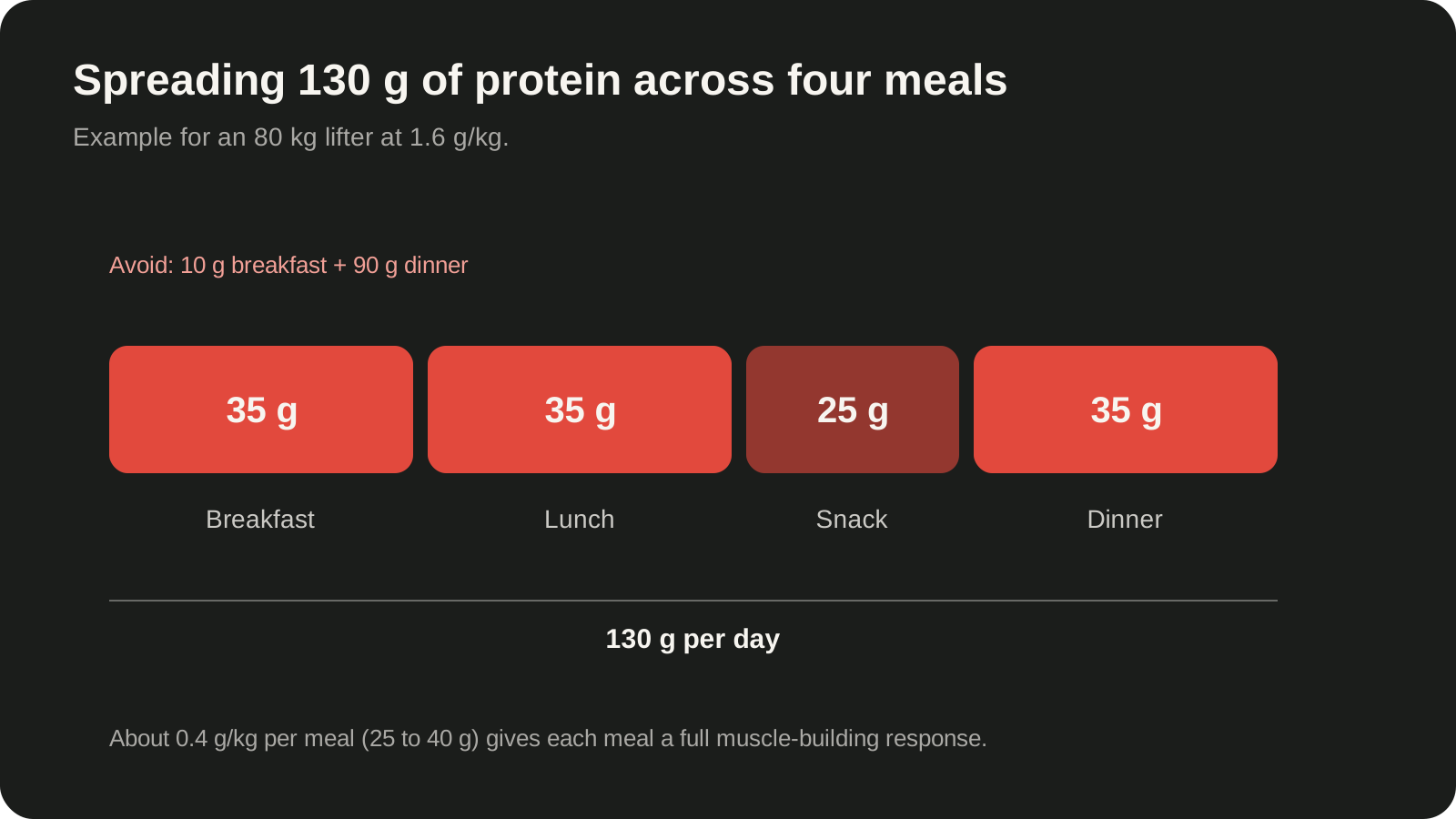
Daily target: 130 g
Breakfast:  35 g   Greek yogurt bowl + 2 eggs
Lunch:      35 g   Chicken rice bowl
Snack:      25 g   Protein shake or cottage cheese
Dinner:     35 g   Salmon, potatoes, vegetables
Four meals of about 30 to 40 g beat one huge dinner and a protein-free breakfast. The pattern does not need to be perfect. Three or five meals work too.
Does timing around workouts matter? Much less than people think. If you eat a protein-rich meal within a few hours before or after training, you are covered. There is no 30-minute "anabolic window" you have to race to.
What about before bed? A slow-digesting source such as casein or cottage cheese before sleep can add a small benefit. It is a useful way to fit in the last 30 g, not a requirement.
Best Protein Foods (Per 100 g)
| Food | Protein | Calories |
|---|---|---|
| Chicken breast, cooked | 31 g | 165 |
| Lean beef, cooked | 26 g | 217 |
| Tuna, canned in water | 25 g | 116 |
| Salmon, cooked | 22 g | 206 |
| Firm tofu | 15 g | 144 |
| Cottage cheese, low fat | 12 g | 82 |
| Greek yogurt, plain 0% | 10 g | 59 |
| Eggs (about 2 large) | 13 g | 143 |
| Lentils, cooked | 9 g | 116 |
| Whey protein powder | about 80 g | about 380 |
Plant-based eaters can build muscle just as well. Plant proteins contain less leucine and are slightly less digestible, so aim for the upper half of your range and mix sources: soy, lentils, beans, seitan, peas and grains across the day.
Is High Protein Safe?
For healthy people, yes. Intakes up to about 2.2 to 3 g/kg have been studied for months to years without harm to kidney or liver function in people with healthy kidneys.
The exception is existing kidney disease. If you have reduced kidney function, ask your doctor before raising protein.
How to Hit Your Protein Target Without Tracking Forever
- Build every meal around a protein. Pick the chicken, fish, eggs, tofu or yogurt first, then add the rest.
- Use the palm method. One palm-sized portion of meat or fish is roughly 25 to 30 g of protein. Women aim for about 1 to 2 palms per meal, men 2.
- Swap, do not add. Greek yogurt instead of regular yogurt, a protein-rich breakfast instead of toast and jam.
- Keep one easy backup. A shake, a tin of tuna or a tub of cottage cheese rescues a low day.
- Track for one week. A short check shows where you really are. Most people find they are 30 to 50 g short.
Let FitFocus Plan It for You
Working out grams per meal is the boring part. The FitFocus AI meal planner builds a full week of meals around your calorie and protein targets, calculates macros from the actual ingredients, and gives you a shopping list. Pair it with a personal workout plan so the protein has something to build.
Key Takeaways
- Lifters need about 1.6 g/kg per day. Going up to 2.2 g/kg is safe insurance.
- During a diet, aim for 1.8 to 2.4 g/kg to keep your muscle.
- Split it into 3 to 5 meals of 25 to 40 g.
- Total daily intake matters far more than timing.
- Whole foods first, protein powder as a convenient top-up.