Resistance Band Back Exercises
Bands are the only home tool that covers both directions of back training. Anchor high and you get pulldowns, close-grip, underhand, and one-arm kneeling, which is the vertical pull most home routines skip entirely. Anchor low or sit with the band around your feet and you get rows. A band also assists a pull-up, taking part of your bodyweight so you can train the real movement while building towards a full rep, which no other portable tool can do.
Why train back with resistance band
- Covers vertical pulldowns, the pattern most home setups miss
- Band-assisted pull-ups train the real movement before you can do one
- Seated and standing rows load the mid-back with no bench or rack
- Whole back session packs into a bag with no weight to carry
All 10 resistance band back exercises
Every guide below includes an animated GIF demonstration, numbered form cues, the muscle it targets, and sets and reps for strength, hypertrophy, and endurance.
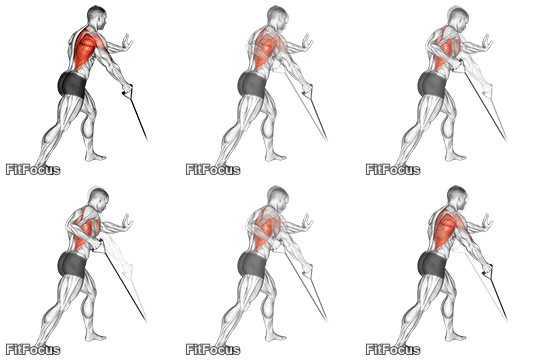 Band One Arm Standing Low RowUpper Back · Band · Intermediate
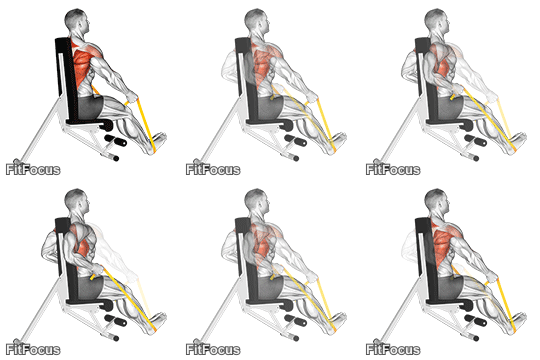 Resistance Band Seated Straight Back RowUpper Back · Resistance Band · Intermediate
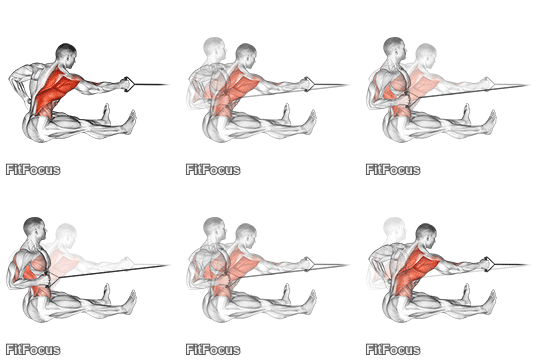 Band One Arm Twisting Seated RowUpper Back · Band · Advanced
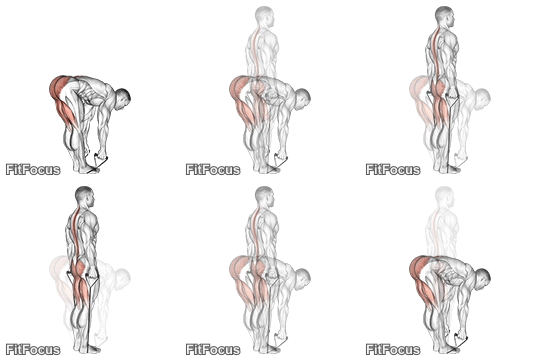 Band Straight Leg DeadliftSpine · Band · Advanced
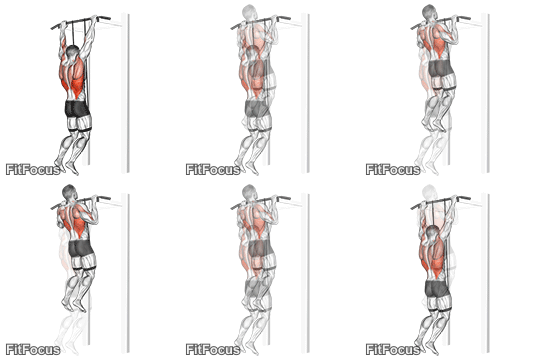 Band Assisted Pull-upLats · Band · Intermediate
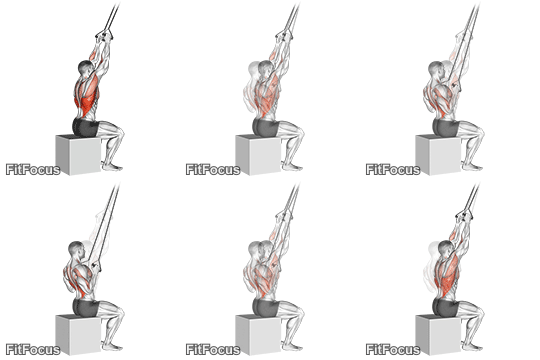 Band Close-grip PulldownLats · Band · Intermediate
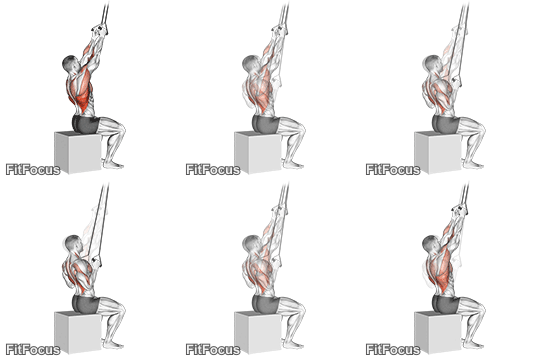 Band Fixed Back Close Grip PulldownLats · Band · Advanced
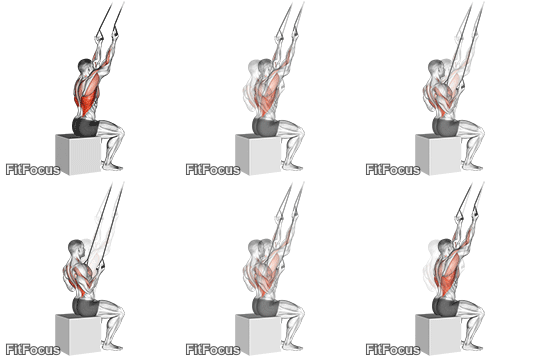 Band Underhand PulldownLats · Band · Advanced
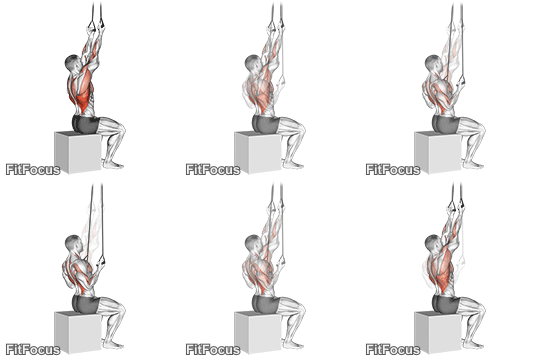 Band Fixed Back Underhand PulldownLats · Band · Advanced
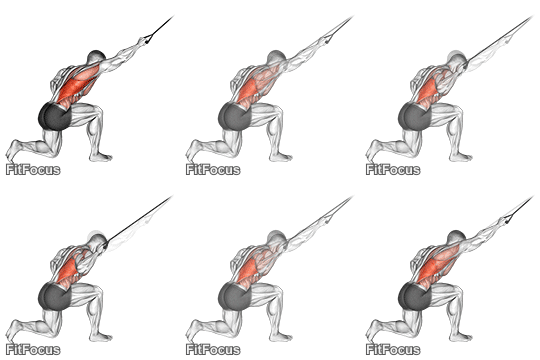 Band Kneeling One Arm PulldownLats · Band · Advanced
Resistance Band Back Training FAQ
Can band pulldowns replace a lat pulldown machine?
They train the same pattern and hit the lats properly, but the resistance profile is different: a band is lightest at the top where the lats are stretched and heaviest at the bottom where they are already contracted. That is the opposite of ideal for lat growth, so pair band pulldowns with band-assisted pull-ups, where your bodyweight supplies load at the stretch.
How do band-assisted pull-ups work?
Loop the band over the bar and put a knee or foot in it. The band stretches most at the bottom of the rep, so it gives the most help exactly where you are weakest, then fades as you approach the bar. Progress by moving to thinner bands, then to a foot instead of a knee, then to no band.
What band do I need for back work?
Back muscles are strong, so you want a heavy loop band for pull-up assistance and a medium-to-heavy tube set with handles for rows and pulldowns. Two bands you can combine cover far more range than one band on its own, since doubling up changes the load without buying a third.