Kettlebell Back Exercises
Kettlebell rowing gets you something a dumbbell does not: the bell hangs below the hand, so it sits deeper at the bottom of the rep and the lats get a longer stretch. The renegade row goes further and adds an anti-rotation problem on top, because you are rowing from a plank and the trunk has to stop the hips twisting as one arm leaves the floor. The sumo high pull rounds the list out by training the upper back explosively rather than under a slow grind.
Why train back with kettlebell
- Bell hangs below the hand for a deeper stretch at the bottom
- Renegade rows train the back and anti-rotation in the same rep
- Sumo high pulls load the upper back explosively, not just slowly
- One or two bells cover the whole horizontal pulling pattern
All 5 kettlebell back exercises
Every guide below includes an animated GIF demonstration, numbered form cues, the muscle it targets, and sets and reps for strength, hypertrophy, and endurance.
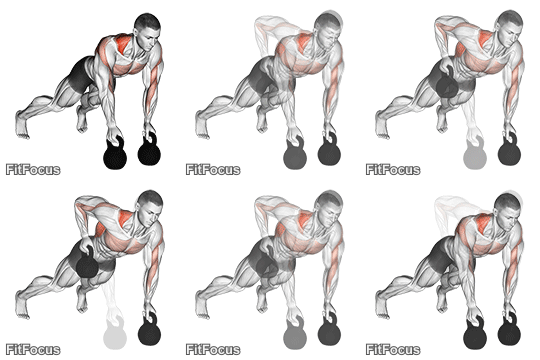 Kettlebell Alternating Renegade RowUpper Back · Kettlebell · Intermediate
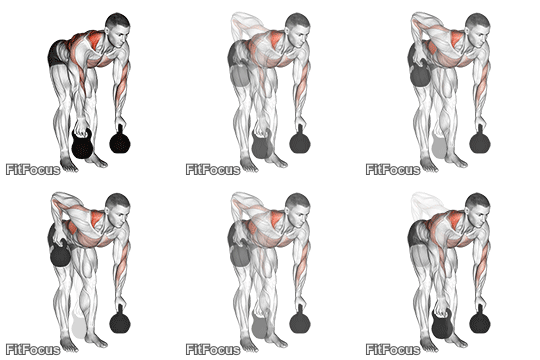 Kettlebell Alternating RowUpper Back · Kettlebell · Intermediate
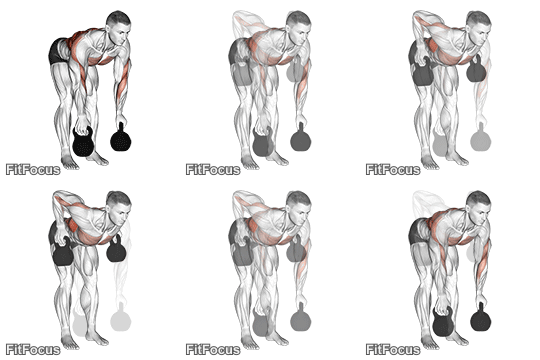 Kettlebell Two Arm RowUpper Back · Kettlebell · Intermediate
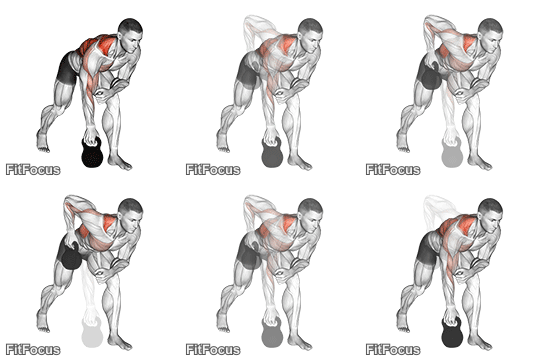 Kettlebell One Arm RowUpper Back · Kettlebell · Advanced
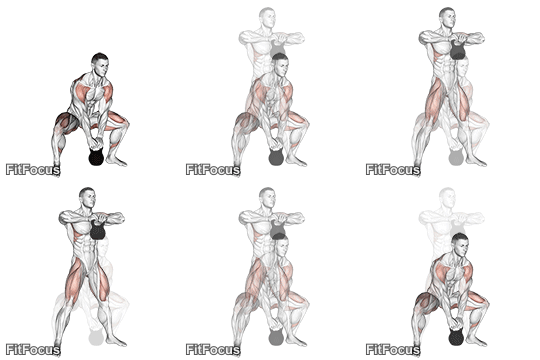 Kettlebell Sumo High PullTraps · Kettlebell · Intermediate
Kettlebell Back Training FAQ
How do I do a renegade row without my hips twisting?
Set your feet wider than your shoulders to widen the base, and think about driving the non-rowing hand hard into the floor rather than about pulling with the working arm. If the hips still rotate, the bells are too heavy. Start with the lightest pair in the rack and add weight only once the plank stays square.
Are kettlebell rows better than dumbbell rows?
They are slightly better at the stretched position because the centre of mass sits lower than the hand, and slightly worse for heavy loading because most gyms stock fewer heavy bells than heavy dumbbells. Use whichever you have; the difference matters far less than how hard you row.
What is a sumo high pull for?
It is a hinge that finishes with the bell pulled to chest height, so the hips generate the speed and the traps and rear delts decelerate and finish the movement. It trains the upper back at a speed that slow rowing never reaches, and it is a useful conditioning piece at the end of a pulling session.