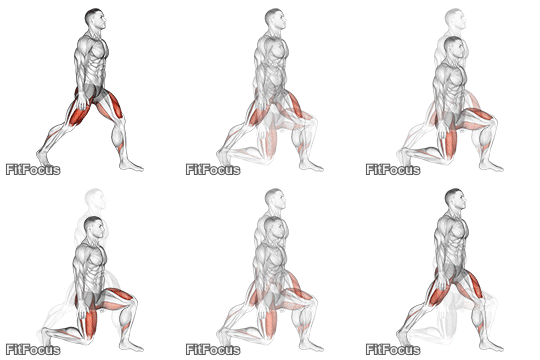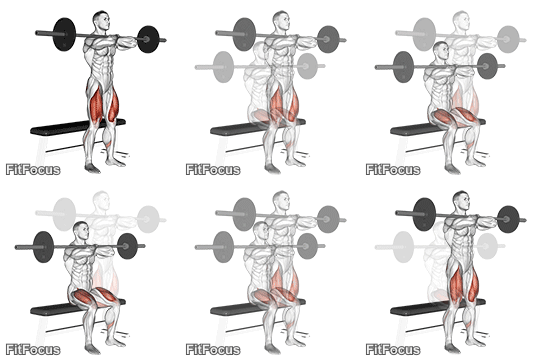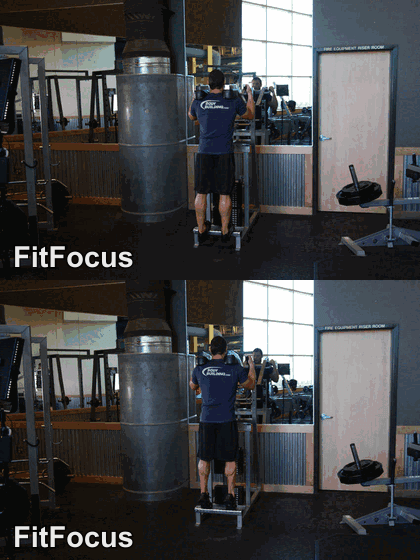
Standing Calf Raise
Standing Calf Raise is a safe first rung on the ladder, using a fixed machine groove to deliver muscle you built on purpose.
How to do Standing Calf Raise
- Adjust the padded lever of the calf raise machine to fit your height.
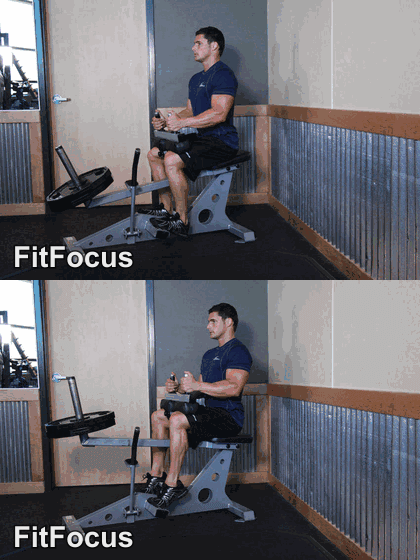
- Place your shoulders under the pads provided and position your toes facing forward (or using any of the two other positions described at the beginning of the chapter). The balls of your feet should be secured on top of the calf block with the heels extending off it. Push the lever up by extending your hips and knees until your torso is standing erect. The knees should be kept with a slight bend; never locked. Toes should be facing forward, outwards or inwards as described at the beginning of the chapter. This will be your starting position.
- Raise your heels as you breathe out by extending your ankles as high as possible and flexing your calf. Ensure that the knee is kept stationary at all times. There should be no bending at any time. Hold the contracted position by a second before you start to go back down.
- Go back slowly to the starting position as you breathe in by lowering your heels as you bend the ankles until calves are stretched.
- Repeat for the recommended amount of repetitions.
Standing Calf Raise Sets and Reps by Goal
Strength
3 sets of 5-6 reps with 2-3 minutes of rest. Control the return instead of letting the stack drop.
Hypertrophy
3 sets of 10-12 reps with 90 seconds of rest. Match the seat and pad settings every session.
Endurance
2-3 sets of 15-18 reps with 45-60 seconds of rest. Add one plate only when the full range stays smooth.
The other half of the week
First plan free
Training is half the prescription
A session tells your calves to adapt. The week you eat decides whether they can. FitFocus writes that week against your own calorie and macro numbers, in about a minute, for free.
- Included: Seven days solved against your calorie and macro targets
- Included: Diet type and allergies applied before the plan is written
- Included: Built from the same profile as your workout plan, on one account
- Days
- 7
- Meals / day
- 3-6
- Diet types
- 5
- Exclusions
- 6
No card. Premium is $9.99 / month.
Common Standing Calf Raise Mistakes
Pushing through pads that force an awkward joint angle
Adjust the machine to your limb lengths, not the other way round.
Moving through the easy half of the range only
Work the part of the range that feels hardest, not the part that feels good.
Easier and Harder Than Standing Calf Raise
Swap Standing Calf Raise For
Standing Calf Raise — Frequently Asked Questions
How do you do the Standing Calf Raise?
Adjust the padded lever of the calf raise machine to fit your height. Place your shoulders under the pads provided and position your toes facing forward (or using any of the two other positions described at the beginning of the chapter). The balls of your feet should be secured on top of the calf block with the heels extending off it. Push the lever up by extending your hips and knees until your torso is standing erect. The knees should be kept with a slight bend; never locked. Toes should be facing forward, outwards or inwards as described at the beginning of the chapter. This will be your starting position. Raise your heels as you breathe out by extending your ankles as high as possible and flexing your calf. Ensure that the knee is kept stationary at all times. There should be no bending at any time. Hold the contracted position by a second before you start to go back down. Use a leverage machine and keep the movement controlled through the full range. The animated GIF above shows the complete rep at normal speed.
What muscles does the Standing Calf Raise work?
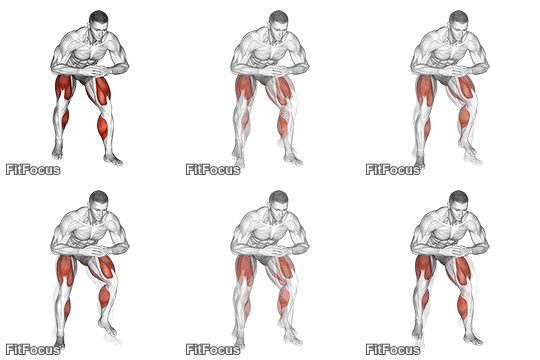
The Standing Calf Raise primarily targets the calves. It is classified as a legs exercise and is performed with a leverage machine.
How many sets and reps of the Standing Calf Raise should I do?
For muscle growth: 3 sets of 10-12 reps with 90 seconds of rest. Match the seat and pad settings every session. Adjust the load rather than the rep target if form breaks down before the final rep.
Is the Standing Calf Raise good for beginners?
Yes. The Standing Calf Raise is a beginner-level movement, so it is a reasonable place to start. Keep the load light enough that you can control every rep and stop 2-3 reps short of failure while you learn the pattern.
What can I do instead of the Standing Calf Raise?
Try the Band Single Leg Calf Raise, Standing Calf Raise (on A Staircase) or the Dumbbell Single Leg Calf Raise. Each trains the calves with a similar movement pattern, so you can swap based on the equipment you have available.
Routines that program Standing Calf Raise
Push Pull Legs (PPL)
The highest-frequency split that still gives each muscle group two sessions a week. Push days train chest, shoulders and triceps. Pull days train back and biceps. Leg days train everything below the waist.
6 days / week
Upper Lower Split
Four sessions a week, each muscle group trained twice. It is the split most intermediate lifters should run: enough frequency to grow, enough rest days to recover, and it survives a missed session better than a six-day plan.
4 days / week