Barbell Squat
The squat is a whole-body brace with knee and hip bend attached: if the trunk cannot hold position, no amount of leg strength gets the bar back up.
How to do Barbell Squat
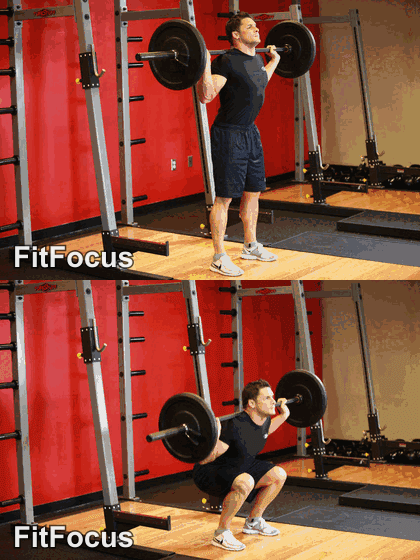
- This exercise is best performed inside a squat rack for safety purposes. To begin, first set the bar on a rack to just below shoulder level. Once the correct height is chosen and the bar is loaded, step under the bar and place the back of your shoulders (slightly below the neck) across it.
- Hold on to the bar using both arms at each side and lift it off the rack by first pushing with your legs and at the same time straightening your torso.
- Step away from the rack and position your legs using a shoulder width medium stance with the toes slightly pointed out. Keep your head up at all times and also maintain a straight back. This will be your starting position. (Note: For the purposes of this discussion we will use the medium stance described above which targets overall development; however you can choose any of the three stances discussed in the foot stances section).
- Begin to slowly lower the bar by bending the knees and hips as you maintain a straight posture with the head up. Continue down until the angle between the upper leg and the calves becomes slightly less than 90-degrees. Inhale as you perform this portion of the movement. Tip: If you performed the exercise correctly, the front of the knees should make an imaginary straight line with the toes that is perpendicular to the front. If your knees are past that imaginary line (if they are past your toes) then you are placing undue stress on the knee and the exercise has been performed incorrectly.
- Begin to raise the bar as you exhale by pushing the floor with the heel of your foot as you straighten the legs again and go back to the starting position.
- Repeat for the recommended amount of repetitions.
Barbell Squat Sets and Reps by Goal
Strength
4-5 sets of 3-5 reps at 80-88% of your one-rep max with 3-5 minutes rest. Re-brace at the top of every rep rather than breathing through the set.
Hypertrophy
3-4 sets of 6-10 reps with 2-3 minutes rest, controlled on the way down and fast on the way up, stopping 1-2 reps short of failure.
Endurance
2-3 sets of 15-20 reps at about half your max with 90 seconds rest. High-rep squatting is far more taxing than the load suggests, so keep the volume modest.
The other half of the week
First plan free
Training is half the prescription
A session tells your quads to adapt. The week you eat decides whether they can. FitFocus writes that week against your own calorie and macro numbers, in about a minute, for free.
- Included: Seven days solved against your calorie and macro targets
- Included: Diet type and allergies applied before the plan is written
- Included: Built from the same profile as your workout plan, on one account
- Days
- 7
- Meals / day
- 3-6
- Diet types
- 5
- Exclusions
- 6
No card. Premium is $9.99 / month.
Common Barbell Squat Mistakes
Letting the pelvis tuck under at the bottom, which loads the lumbar spine in flexion exactly when the weight is heaviest.
Squat only to the depth you can hold a neutral pelvis, then work on ankle and hip mobility to earn more range rather than forcing it under load.
Letting the hips rise faster than the shoulders out of the hole, which turns the squat into a bent-over good morning.
Think about driving the chest and the bar up together. If it still happens, the weight exceeds what your trunk can brace and should come down.
Letting the knees collapse inward on the way up.
Screw the feet into the floor and push the knees out over the second and third toes. Add banded squats or lateral work if the glute medius is the weak link.
Breathing out on the way down and in on the way up, which empties the brace at the moment you need it most.
Take a big breath and brace at the top, hold it through the descent and the drive, and only exhale once the rep is finished.
Easier and Harder Than Barbell Squat
Swap Barbell Squat For
Barbell Squat — Frequently Asked Questions
How do you do the Barbell Squat?
This exercise is best performed inside a squat rack for safety purposes. To begin, first set the bar on a rack to just below shoulder level. Once the correct height is chosen and the bar is loaded, step under the bar and place the back of your shoulders (slightly below the neck) across it. Hold on to the bar using both arms at each side and lift it off the rack by first pushing with your legs and at the same time straightening your torso. Step away from the rack and position your legs using a shoulder width medium stance with the toes slightly pointed out. Keep your head up at all times and also maintain a straight back. This will be your starting position. (Note: For the purposes of this discussion we will use the medium stance described above which targets overall development; however you can choose any of the three stances discussed in the foot stances section). Use a barbell and keep the movement controlled through the full range. The animated GIF above shows the complete rep at normal speed.
What muscles does the Barbell Squat work?
The Barbell Squat primarily targets the quads. It is classified as a legs exercise and is performed with a barbell.
How many sets and reps of the Barbell Squat should I do?
For muscle growth: 3-4 sets of 6-10 reps with 2-3 minutes rest, controlled on the way down and fast on the way up, stopping 1-2 reps short of failure. Adjust the load rather than the rep target if form breaks down before the final rep.
Is the Barbell Squat good for beginners?
It is an intermediate movement. You will get more out of it once you can already perform the basic legs patterns with controlled form. Beginners can still use it with light load and close attention to technique.
What can I do instead of the Barbell Squat?
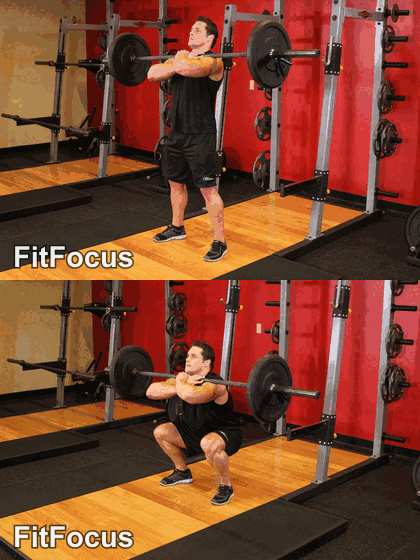
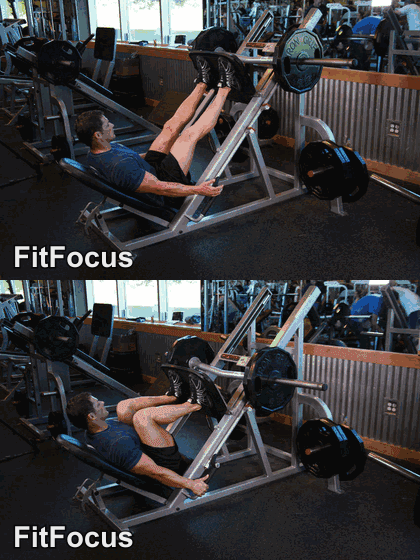
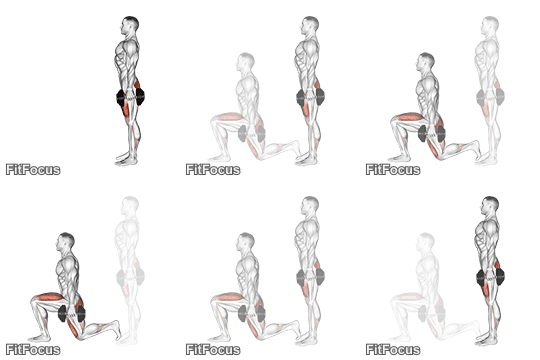
Try the Front Squat, Leg Press or the Dumbbell Lunge. Each trains the quads with a similar movement pattern, so you can swap based on the equipment you have available.
Routines that program Barbell Squat
Push Pull Legs (PPL)
The highest-frequency split that still gives each muscle group two sessions a week. Push days train chest, shoulders and triceps. Pull days train back and biceps. Leg days train everything below the waist.
6 days / week
Upper Lower Split
Four sessions a week, each muscle group trained twice. It is the split most intermediate lifters should run: enough frequency to grow, enough rest days to recover, and it survives a missed session better than a six-day plan.
4 days / week
Full Body Workout Plan
Three sessions a week, every major muscle group trained in each one. It is the most efficient structure in existence for the first year of training, and the best option for anyone who cannot guarantee more than three gym days.
3 days / week
Weight Loss Workout Plan
Losing weight is decided by your diet. What training decides is whether the weight you lose is fat or muscle. This plan keeps heavy compound lifting at the centre and adds conditioning around it, which is the arrangement that protects muscle in a calorie deficit.
4 days / week