Seated Cable Row
Seated Cable Row turns unbroken cable tension into posture that holds through the day — simple enough to learn in one session.
How to do Seated Cable Row
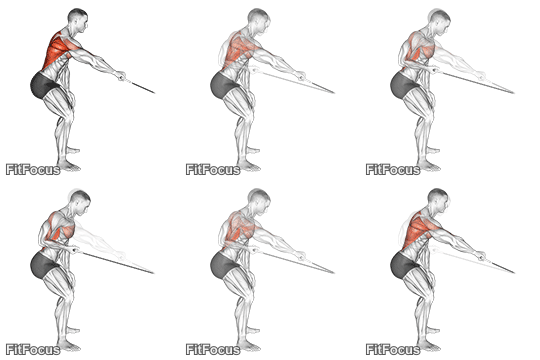
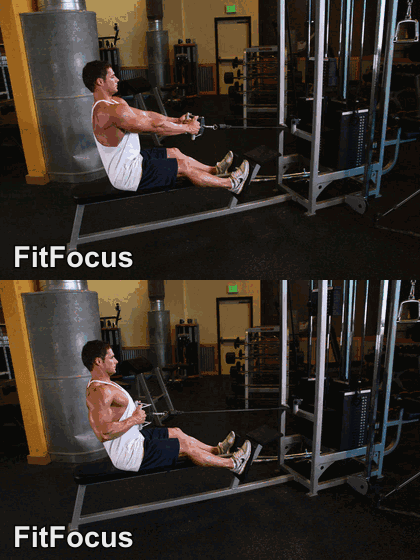
- For this exercise you will need access to a low pulley row machine with a V-bar. Note: The V-bar will enable you to have a neutral grip where the palms of your hands face each other. To get into the starting position, first sit down on the machine and place your feet on the front platform or crossbar provided making sure that your knees are slightly bent and not locked.
- Lean over as you keep the natural alignment of your back and grab the V-bar handles.
- With your arms extended pull back until your torso is at a 90-degree angle from your legs. Your back should be slightly arched and your chest should be sticking out. You should be feeling a nice stretch on your lats as you hold the bar in front of you. This is the starting position of the exercise.
- Keeping the torso stationary, pull the handles back towards your torso while keeping the arms close to it until you touch the abdominals. Breathe out as you perform that movement. At that point you should be squeezing your back muscles hard. Hold that contraction for a second and slowly go back to the original position while breathing in.
- Repeat for the recommended amount of repetitions.
Seated Cable Row Sets and Reps by Goal
Strength
3 sets of 5-6 reps with 2-3 minutes of rest. Step back until the stack never rests at the top.
Hypertrophy
3 sets of 10-12 reps with 90 seconds of rest. Stretch the return phase before adding weight.
Endurance
2-3 sets of 15-18 reps with 45-60 seconds of rest. Move the pin one plate once the last rep feels easy.
The other half of the week
First plan free
Training is half the prescription
A session tells your upper back to adapt. The week you eat decides whether they can. FitFocus writes that week against your own calorie and macro numbers, in about a minute, for free.
- Included: Seven days solved against your calorie and macro targets
- Included: Diet type and allergies applied before the plan is written
- Included: Built from the same profile as your workout plan, on one account
- Days
- 7
- Meals / day
- 3-6
- Diet types
- 5
- Exclusions
- 6
No card. Premium is $9.99 / month.
Common Seated Cable Row Mistakes
Setting the pulley at the wrong height for the line of pull
Match pulley height so the cable lines up with the working muscle.
Rounding the upper back to reach a little further
Hold a tall chest and shorten the range instead.
Easier and Harder Than Seated Cable Row
Swap Seated Cable Row For
Seated Cable Row — Frequently Asked Questions
How do you do the Seated Cable Row?
For this exercise you will need access to a low pulley row machine with a V-bar. Note: The V-bar will enable you to have a neutral grip where the palms of your hands face each other. To get into the starting position, first sit down on the machine and place your feet on the front platform or crossbar provided making sure that your knees are slightly bent and not locked. Lean over as you keep the natural alignment of your back and grab the V-bar handles. With your arms extended pull back until your torso is at a 90-degree angle from your legs. Your back should be slightly arched and your chest should be sticking out. You should be feeling a nice stretch on your lats as you hold the bar in front of you. This is the starting position of the exercise. Use a cable machine and keep the movement controlled through the full range. The animated GIF above shows the complete rep at normal speed.
What muscles does the Seated Cable Row work?
The Seated Cable Row primarily targets the upper back. It is classified as a back exercise and is performed with a cable machine.
How many sets and reps of the Seated Cable Row should I do?
For muscle growth: 3 sets of 10-12 reps with 90 seconds of rest. Stretch the return phase before adding weight. Adjust the load rather than the rep target if form breaks down before the final rep.
Is the Seated Cable Row good for beginners?
Yes. The Seated Cable Row is a beginner-level movement, so it is a reasonable place to start. Keep the load light enough that you can control every rep and stop 2-3 reps short of failure while you learn the pattern.
What can I do instead of the Seated Cable Row?
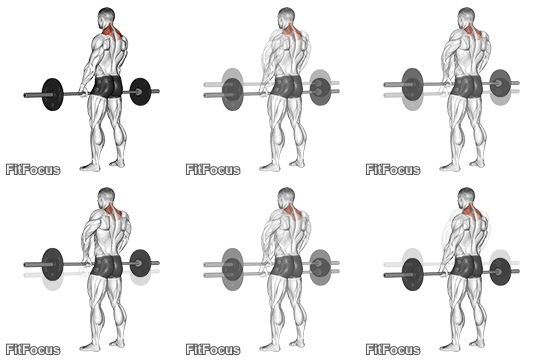
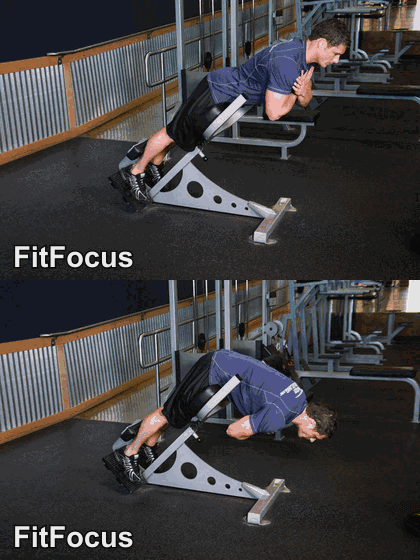
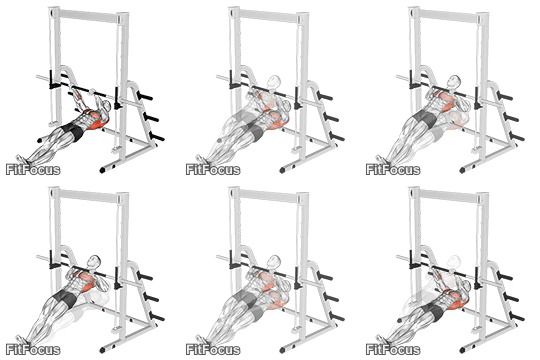
Try the Barbell Reverse Grip Incline Bench Row, Smith Narrow Row or the Lever Reverse Grip Vertical Row. Each trains the upper back with a similar movement pattern, so you can swap based on the equipment you have available.
Routines that program Seated Cable Row
Push Pull Legs (PPL)
The highest-frequency split that still gives each muscle group two sessions a week. Push days train chest, shoulders and triceps. Pull days train back and biceps. Leg days train everything below the waist.
6 days / week
Full Body Workout Plan
Three sessions a week, every major muscle group trained in each one. It is the most efficient structure in existence for the first year of training, and the best option for anyone who cannot guarantee more than three gym days.
3 days / week