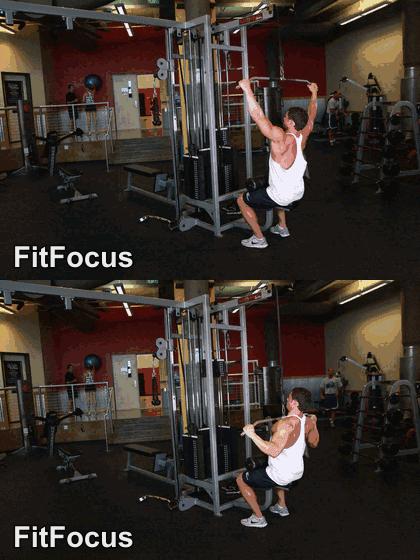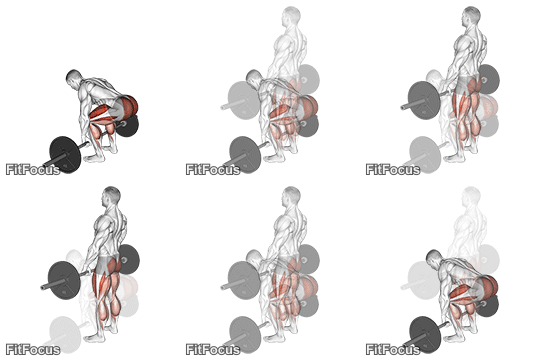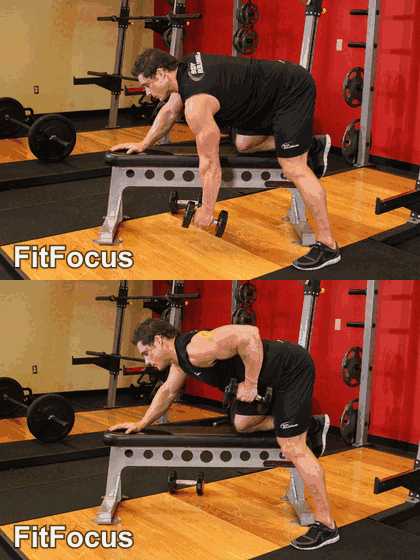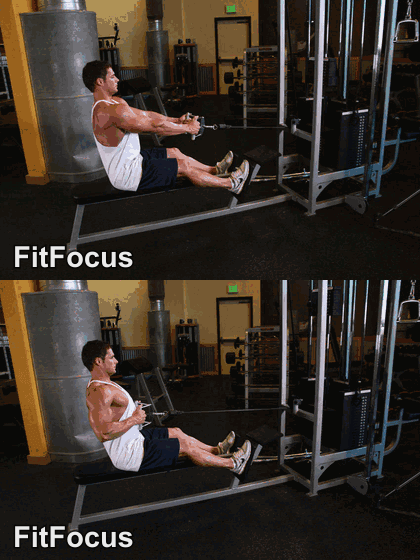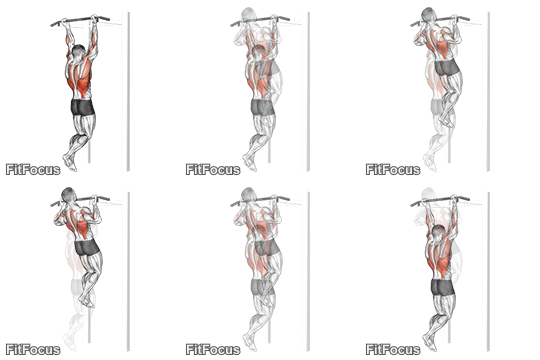
Chin-Up
Skip the guesswork: Chin-Up leans on pure bodyweight leverage for control through the whole range.
How to do Chin-Up
- Grab the pull-up bar with the palms facing your torso and a grip closer than the shoulder width.
- As you have both arms extended in front of you holding the bar at the chosen grip width, keep your torso as straight as possible while creating a curvature on your lower back and sticking your chest out. This is your starting position. Tip: Keeping the torso as straight as possible maximizes biceps stimulation while minimizing back involvement.
- As you breathe out, pull your torso up until your head is around the level of the pull-up bar. Concentrate on using the biceps muscles in order to perform the movement. Keep the elbows close to your body. Tip: The upper torso should remain stationary as it moves through space and only the arms should move. The forearms should do no other work other than hold the bar.
- After a second of squeezing the biceps in the contracted position, slowly lower your torso back to the starting position; when your arms are fully extended. Breathe in as you perform this portion of the movement.
- Repeat this motion for the prescribed amount of repetitions.
Chin-Up Sets and Reps by Goal
Strength
4 sets of 6-8 reps at your hardest clean leverage, resting 2-3 minutes. Change leverage or elevation before you add load.
Hypertrophy
4 sets of 12-18 reps with 60 seconds of rest. Hold the end position for a beat once reps come easily.
Endurance
3 sets of 25-30 reps with 30-45 seconds of rest. Add reps first, then slow the lowering phase.
The other half of the week
First plan free
Training is half the prescription
A session tells your lats to adapt. The week you eat decides whether they can. FitFocus writes that week against your own calorie and macro numbers, in about a minute, for free.
- Included: Seven days solved against your calorie and macro targets
- Included: Diet type and allergies applied before the plan is written
- Included: Built from the same profile as your workout plan, on one account
- Days
- 7
- Meals / day
- 3-6
- Diet types
- 5
- Exclusions
- 6
No card. Premium is $9.99 / month.
Common Chin-Up Mistakes
Shortening the range as soon as the set gets hard
End the set on the last full-range rep instead of grinding out halves.
Letting a nearby joint take over as the set gets hard
Stop the set as soon as the working joint stops leading the movement.
Letting the last set decay into a different exercise
End the set when the pattern changes, not when the reps run out.
Easier and Harder Than Chin-Up
Swap Chin-Up For
Chin-Up — Frequently Asked Questions
How do you do the Chin-Up?
Grab the pull-up bar with the palms facing your torso and a grip closer than the shoulder width. As you have both arms extended in front of you holding the bar at the chosen grip width, keep your torso as straight as possible while creating a curvature on your lower back and sticking your chest out. This is your starting position. Tip: Keeping the torso as straight as possible maximizes biceps stimulation while minimizing back involvement. As you breathe out, pull your torso up until your head is around the level of the pull-up bar. Concentrate on using the biceps muscles in order to perform the movement. Keep the elbows close to your body. Tip: The upper torso should remain stationary as it moves through space and only the arms should move. The forearms should do no other work other than hold the bar. Use your bodyweight only and keep the movement controlled through the full range. The animated GIF above shows the complete rep at normal speed.
What muscles does the Chin-Up work?
The Chin-Up primarily targets the lats. It is classified as a back exercise and is performed with your bodyweight only.
How many sets and reps of the Chin-Up should I do?
For muscle growth: 4 sets of 12-18 reps with 60 seconds of rest. Hold the end position for a beat once reps come easily. Adjust the load rather than the rep target if form breaks down before the final rep.
Is the Chin-Up good for beginners?
It is an intermediate movement. You will get more out of it once you can already perform the basic back patterns with controlled form. Beginners can still use it with light load and close attention to technique.
What can I do instead of the Chin-Up?
Try the Weighted Pull-up, Cable Wide Grip Rear Pulldown Behind Neck or the Barbell Decline Wide-grip Pullover. Each trains the lats with a similar movement pattern, so you can swap based on the equipment you have available.