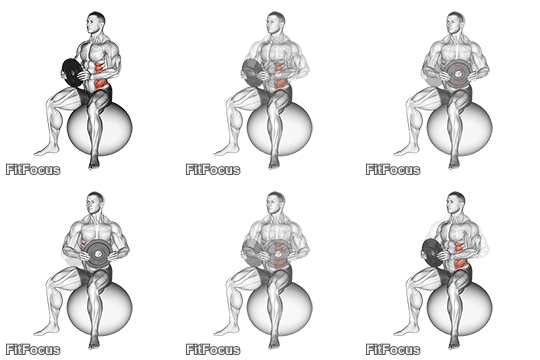
Weighted Seated Twist (on Stability Ball)
Also known as: seated weighted twist on stability ball
Chasing bracing strength that carries over? Weighted Seated Twist (on Stability Ball) uses added external load to get there.
How to do Weighted Seated Twist (on Stability Ball)
- Sit on a stability ball with your feet flat on the ground and your knees bent at a 90-degree angle.
- Hold a weight plate or dumbbell with both hands close to your chest.
- Engage your core and slowly rotate your torso to one side, keeping your hips stable.
- Pause for a moment at the end of the rotation, then slowly return to the starting position.
- Repeat the rotation to the other side.
- Continue alternating sides for the desired number of repetitions.
Weighted Seated Twist (on Stability Ball) Sets and Reps by Goal
Strength
4 sets of 4-6 reps with 3 minutes of rest. Secure the load before the set so form does not shift.
Hypertrophy
4 sets of 8-12 reps with 75-90 seconds of rest. Drop the weight and finish clean if position slips.
Endurance
3 sets of 15-20 reps with 45 seconds of rest. Add the smallest increment that still feels different.
The other half of the week
First plan free
Training is half the prescription
A session tells your abs to adapt. The week you eat decides whether they can. FitFocus writes that week against your own calorie and macro numbers, in about a minute, for free.
- Included: Seven days solved against your calorie and macro targets
- Included: Diet type and allergies applied before the plan is written
- Included: Built from the same profile as your workout plan, on one account
- Days
- 7
- Meals / day
- 3-6
- Diet types
- 5
- Exclusions
- 6
No card. Premium is $9.99 / month.
Common Weighted Seated Twist (on Stability Ball) Mistakes
Holding the weight where it drags you out of position
Keep the load close to your centre so posture does not change.
Pulling with the hip flexors while the abs stay slack
Start every rep by flattening the lower back down, then move.
Repeating the same load and rep scheme for months
Pick one variable, load, reps, or tempo, and push it every week.
Easier and Harder Than Weighted Seated Twist (on Stability Ball)
Swap Weighted Seated Twist (on Stability Ball) For
Weighted Seated Twist (on Stability Ball) — Frequently Asked Questions
How do you do the Weighted Seated Twist (on Stability Ball)?
Sit on a stability ball with your feet flat on the ground and your knees bent at a 90-degree angle. Hold a weight plate or dumbbell with both hands close to your chest. Engage your core and slowly rotate your torso to one side, keeping your hips stable. Use added weight and keep the movement controlled through the full range. The animated GIF above shows the complete rep at normal speed.
What muscles does the Weighted Seated Twist (on Stability Ball) work?
The Weighted Seated Twist (on Stability Ball) primarily targets the abs. It is classified as a core exercise and is performed with added weight.
How many sets and reps of the Weighted Seated Twist (on Stability Ball) should I do?
For muscle growth: 4 sets of 8-12 reps with 75-90 seconds of rest. Drop the weight and finish clean if position slips. Adjust the load rather than the rep target if form breaks down before the final rep.
Is the Weighted Seated Twist (on Stability Ball) good for beginners?
It is an intermediate movement. You will get more out of it once you can already perform the basic core patterns with controlled form. Beginners can still use it with light load and close attention to technique.
What can I do instead of the Weighted Seated Twist (on Stability Ball)?
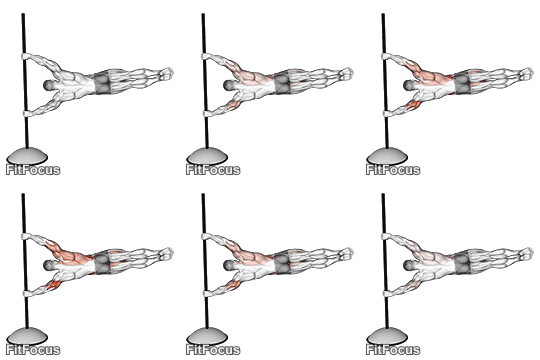
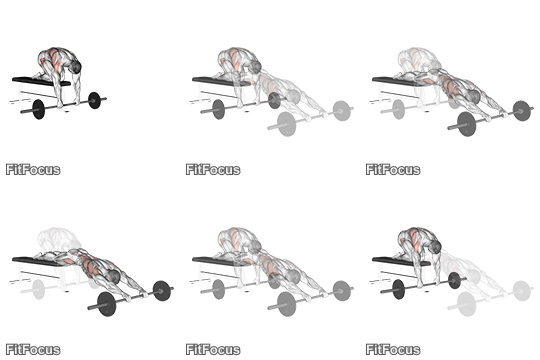
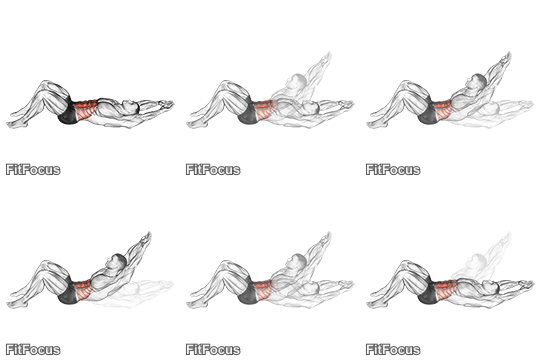
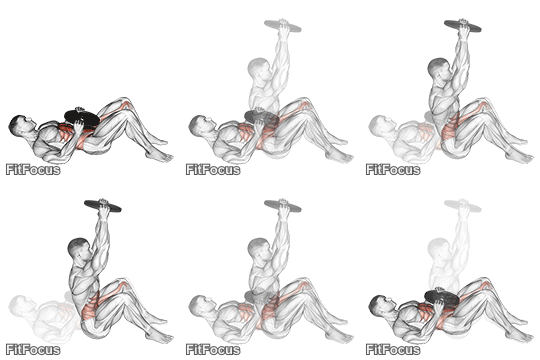
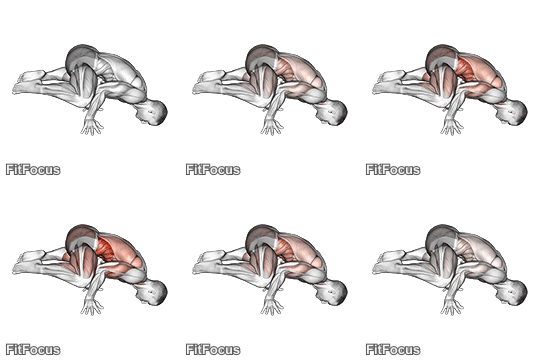
Try the Flag, Barbell Rollerout From Bench or the Crunch (on Stability Ball). Each trains the abs with a similar movement pattern, so you can swap based on the equipment you have available.
Is the Weighted Seated Twist (on Stability Ball) the same as the seated weighted twist on stability ball?
Yes. The Weighted Seated Twist (on Stability Ball) is also commonly called the seated weighted twist on stability ball. Different gyms and training programs label it differently, but "seated weighted twist on stability ball" refer to this same movement.