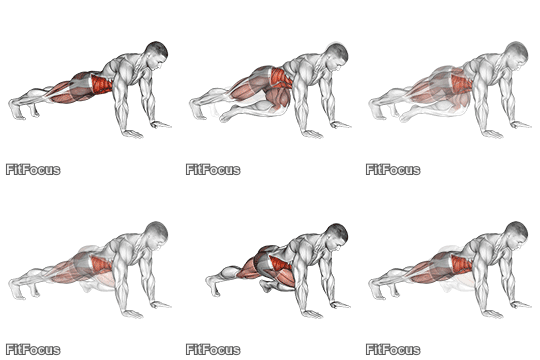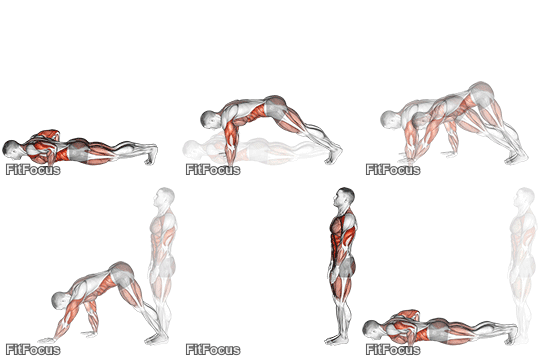
Inchworm
What Inchworm really gives you is a trunk that resists rather than folds, driven by pure bodyweight leverage.
How to do Inchworm
- Start in a standing position with your feet hip-width apart.
- Bend forward at the waist and place your hands on the ground in front of you.
- Walk your hands forward until you are in a high plank position, with your body in a straight line from head to toe.
- Pause for a moment, then walk your hands back towards your feet, keeping your legs as straight as possible.
- Once your hands reach your feet, stand back up to the starting position.
- Repeat for the desired number of repetitions.
Inchworm Sets and Reps by Goal
Strength
4 sets of 6-8 reps at your hardest clean leverage, resting 2-3 minutes. Add reps first, then slow the lowering phase.
Hypertrophy
4 sets of 12-18 reps with 60 seconds of rest. Change leverage or elevation before you add load.
Endurance
3 sets of 25-30 reps with 30-45 seconds of rest. Hold the end position for a beat once reps come easily.
The other half of the week
First plan free
Training is half the prescription
A session tells your abs to adapt. The week you eat decides whether they can. FitFocus writes that week against your own calorie and macro numbers, in about a minute, for free.
- Included: Seven days solved against your calorie and macro targets
- Included: Diet type and allergies applied before the plan is written
- Included: Built from the same profile as your workout plan, on one account
- Days
- 7
- Meals / day
- 3-6
- Diet types
- 5
- Exclusions
- 6
No card. Premium is $9.99 / month.
Common Inchworm Mistakes
Rushing reps so gravity does most of the work
Take two to three counts on the lowering phase of every rep.
Holding your breath through the hardest part of the rep
Exhale as you brace so the ribs stay down and pressure stays controlled.
Easier and Harder Than Inchworm
Swap Inchworm For
Inchworm — Frequently Asked Questions
How do you do the Inchworm?
Start in a standing position with your feet hip-width apart. Bend forward at the waist and place your hands on the ground in front of you. Walk your hands forward until you are in a high plank position, with your body in a straight line from head to toe. Use your bodyweight only and keep the movement controlled through the full range. The animated GIF above shows the complete rep at normal speed.
What muscles does the Inchworm work?
The Inchworm primarily targets the abs. It is classified as a core exercise and is performed with your bodyweight only.
How many sets and reps of the Inchworm should I do?
For muscle growth: 4 sets of 12-18 reps with 60 seconds of rest. Change leverage or elevation before you add load. Adjust the load rather than the rep target if form breaks down before the final rep.
Is the Inchworm good for beginners?
It is an intermediate movement. You will get more out of it once you can already perform the basic core patterns with controlled form. Beginners can still use it with light load and close attention to technique.
What can I do instead of the Inchworm?
Try the Cable Russian Twists (on Stability Ball), Band Kneeling Twisting Crunch or the Assisted Sit-up. Each trains the abs with a similar movement pattern, so you can swap based on the equipment you have available.