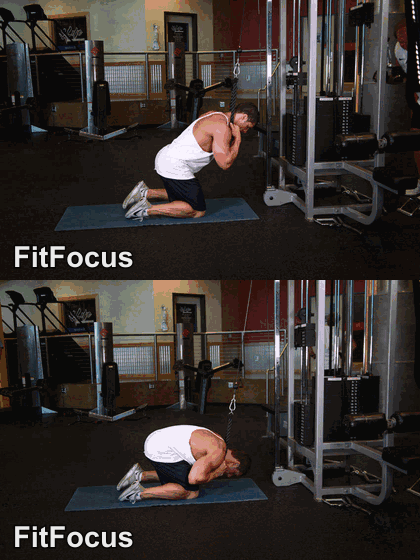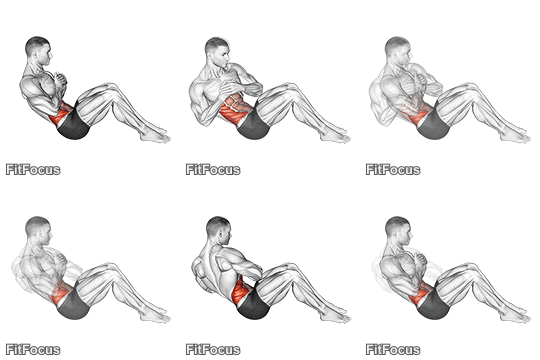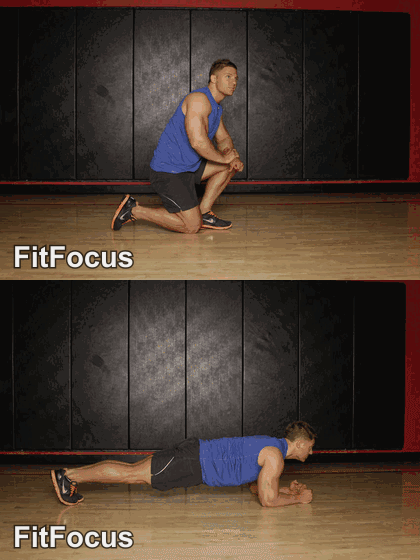
Plank
A plank is a test of how long you can hold a hard brace, not how long you can lie in a straight-ish line. Ten hard seconds beats two soft minutes.
How to do Plank
- Lie face down and set your forearms on the floor with the elbows directly under the shoulders and the hands pointing forward.
- Tuck your toes under and lift your hips until the body forms one straight line from heels to head.
- Squeeze the glutes and brace the abs as if bracing for a punch, keeping the ribs pulled down so the lower back does not arch.
- Look at the floor a short distance ahead to keep the neck neutral, and breathe normally rather than holding your breath.
- Hold for the target time, then lower the knees to the floor to finish the set rather than letting the hips sag first.
Plank Sets and Reps by Goal
Strength
4 sets of 15-25 seconds of maximum-tension holds, or add a weight plate on the upper back. Rest 60-90 seconds.
Hypertrophy
3-4 sets of 30-45 seconds with the glutes and abs squeezed as hard as possible, or lift one arm or leg to raise the demand. Rest 60 seconds.
Endurance
3 sets of 45-90 seconds. Once you pass 90 seconds comfortably, make the position harder rather than holding for longer.
The other half of the week
First plan free
Training is half the prescription
A session tells your abs to adapt. The week you eat decides whether they can. FitFocus writes that week against your own calorie and macro numbers, in about a minute, for free.
- Included: Seven days solved against your calorie and macro targets
- Included: Diet type and allergies applied before the plan is written
- Included: Built from the same profile as your workout plan, on one account
- Days
- 7
- Meals / day
- 3-6
- Diet types
- 5
- Exclusions
- 6
No card. Premium is $9.99 / month.
Common Plank Mistakes
Letting the hips drift up into a pike, which turns the hold into a rest position.
Set the hips so the body forms one line from heels to head, and check the position in a mirror or on video once.
Letting the lower back sag as the set goes on, which loads the spine instead of the abs.
Tuck the pelvis slightly, squeeze the glutes, and end the set the moment the position starts to slide.
Holding for minutes at low tension because the clock feels like the point.
Brace as if bracing for a punch and push the forearms into the floor. If you can hold it past 90 seconds, elevate the feet or add load instead.
Easier and Harder Than Plank
Swap Plank For
Plank — Frequently Asked Questions
How do you do the Plank?
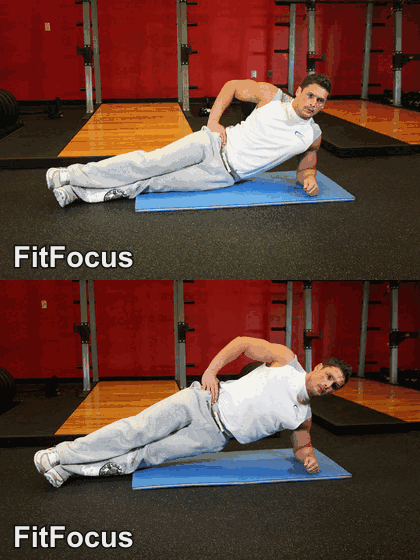
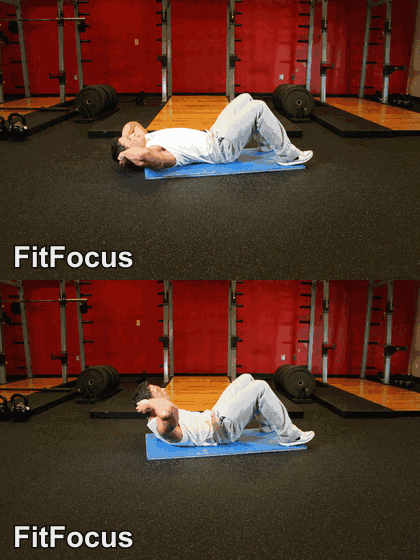
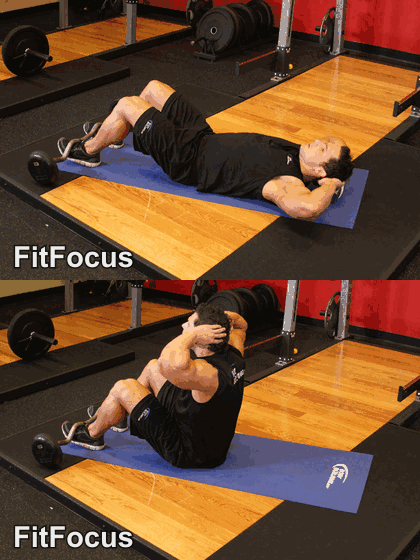
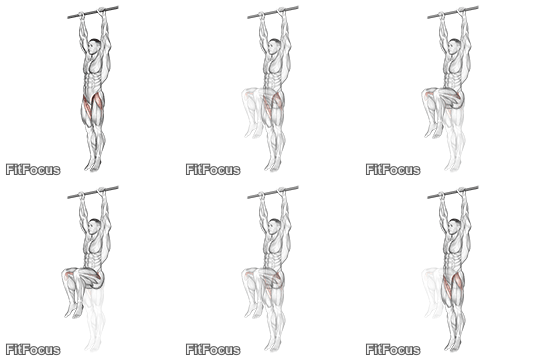
Lie face down and set your forearms on the floor with the elbows directly under the shoulders and the hands pointing forward. Tuck your toes under and lift your hips until the body forms one straight line from heels to head. Squeeze the glutes and brace the abs as if bracing for a punch, keeping the ribs pulled down so the lower back does not arch. Use your bodyweight only and keep the movement controlled through the full range. The animated GIF above shows the complete rep at normal speed.
What muscles does the Plank work?
The Plank primarily targets the abs. It is classified as a core exercise and is performed with your bodyweight only.
How many sets and reps of the Plank should I do?
For muscle growth: 3-4 sets of 30-45 seconds with the glutes and abs squeezed as hard as possible, or lift one arm or leg to raise the demand. Rest 60 seconds. Adjust the load rather than the rep target if form breaks down before the final rep.
Is the Plank good for beginners?
Yes. The Plank is a beginner-level movement, so it is a reasonable place to start. Keep the load light enough that you can control every rep and stop 2-3 reps short of failure while you learn the pattern.
What can I do instead of the Plank?
Try the Side Plank, Ab Wheel Rollout or the Dead Bug. Each trains the abs with a similar movement pattern, so you can swap based on the equipment you have available.
Routines that program Plank
Upper Lower Split
Four sessions a week, each muscle group trained twice. It is the split most intermediate lifters should run: enough frequency to grow, enough rest days to recover, and it survives a missed session better than a six-day plan.
4 days / week
Full Body Workout Plan
Three sessions a week, every major muscle group trained in each one. It is the most efficient structure in existence for the first year of training, and the best option for anyone who cannot guarantee more than three gym days.
3 days / week
Dumbbell Only Workout Plan
A full training week built entirely from dumbbell and bodyweight movements. Everything here works in a spare room with one adjustable pair, and it covers every major muscle group without a barbell, rack or cable stack.
3 days / week
Bodyweight Workout Plan
A complete training week that needs no equipment at all. Progress comes from harder variations and higher reps rather than heavier loads, so it keeps working long past the first month.
3 days / week
Weight Loss Workout Plan
Losing weight is decided by your diet. What training decides is whether the weight you lose is fat or muscle. This plan keeps heavy compound lifting at the centre and adds conditioning around it, which is the arrangement that protects muscle in a calorie deficit.
4 days / week